
We’ve all dealt with a tough boss or a blunt coworker. But when does that behavior cross a line from just being unpleasant into something more damaging? That's where we start talking about workplace verbal abuse.
This isn't about a single off-hand comment or someone having a bad day. It’s a pattern of harmful language—constant criticism, public humiliation, yelling, or belittling remarks—that creates a toxic and psychologically draining environment. This isn't just "shop talk"; it's a relentless assault that can crush your confidence, tank your performance, and seriously harm your mental health.
Defining Workplace Verbal Abuse

Imagine the difference between a sudden thunderstorm and a cold, constant drizzle. A one-time argument is like a storm—it’s loud and unpleasant, but it passes. Verbal abuse, on the other hand, is that miserable, day-in, day-out drizzle that soaks you to the bone and leaves you feeling chilled and defeated. It's the steady drip of insults, condescending tones, and gaslighting that defines the experience.
This kind of behavior is a far cry from "tough management" or a "high-pressure culture." It's the intentional use of words to control, intimidate, or demean someone. The fallout is real, often leading to severe anxiety, depression, and burnout that can force good people out of their jobs.
Distinguishing Rudeness from Abuse
It’s crucial to know the difference between a difficult personality and an abusive one. A rude manager might be abrupt or demanding. An abusive manager, however, engages in a persistent pattern of demeaning behavior. The key difference is the relentless nature of the attacks and the clear intent to harm or control.
A core element of verbal abuse is its power to create a hostile work environment. When the behavior is severe or pervasive enough to alter the conditions of your employment, it crosses from being merely unprofessional into potentially illegal territory.
Healthy workplaces are built on mutual respect. You can see what that looks like by reviewing the 10 principles of ethical workplace communication. When a supervisor or coworker constantly tramples these basic standards, you’re likely dealing with an abusive situation.
The Legal Line for Verbal Abuse
Here’s a critical point: simply being a jerk isn't illegal. But workplace verbal abuse often crosses a legal boundary under federal law. The tipping point is when the abuse is tied to a protected characteristic.
These federally protected classes include your:
- Race or skin color
- Religion or creed
- National origin
- Gender or sex (including pregnancy)
- Age (40 and over)
- Disability
When the yelling, insults, and belittling are happening because of one of these traits, it’s no longer just workplace abuse—it’s illegal harassment. This guide will walk you through how to identify these behaviors, document everything correctly, and understand the rights you have as an employee in Mississippi.
Recognizing the Signs of Verbal Abuse at Work
It can be tough to put your finger on workplace verbal abuse. A lot of the time, it’s cleverly disguised as "tough management" or "just being direct." But there’s a world of difference between constructive feedback meant to help you grow and a pattern of communication designed to control, belittle, and demean you.
Think of it this way: a good coach points out how you can improve your swing to hit the ball farther. A verbal abuser just screams that you're a terrible player. One builds you up; the other tears you down.
This kind of abuse isn't always a dramatic, movie-style shouting match. More often, it's subtle—a series of quiet jabs and manipulative comments that slowly chip away at your confidence. The first and most critical step is learning to recognize these behaviors for what they are: completely unacceptable.
Common Forms of Overt and Covert Abuse
Verbal abuse can be loud and obvious or quiet and insidious, but both forms are equally destructive. What truly matters is the persistent pattern of behavior and the damage it does to your well-being and your ability to do your job.
Here are some of the most common signs to watch for:
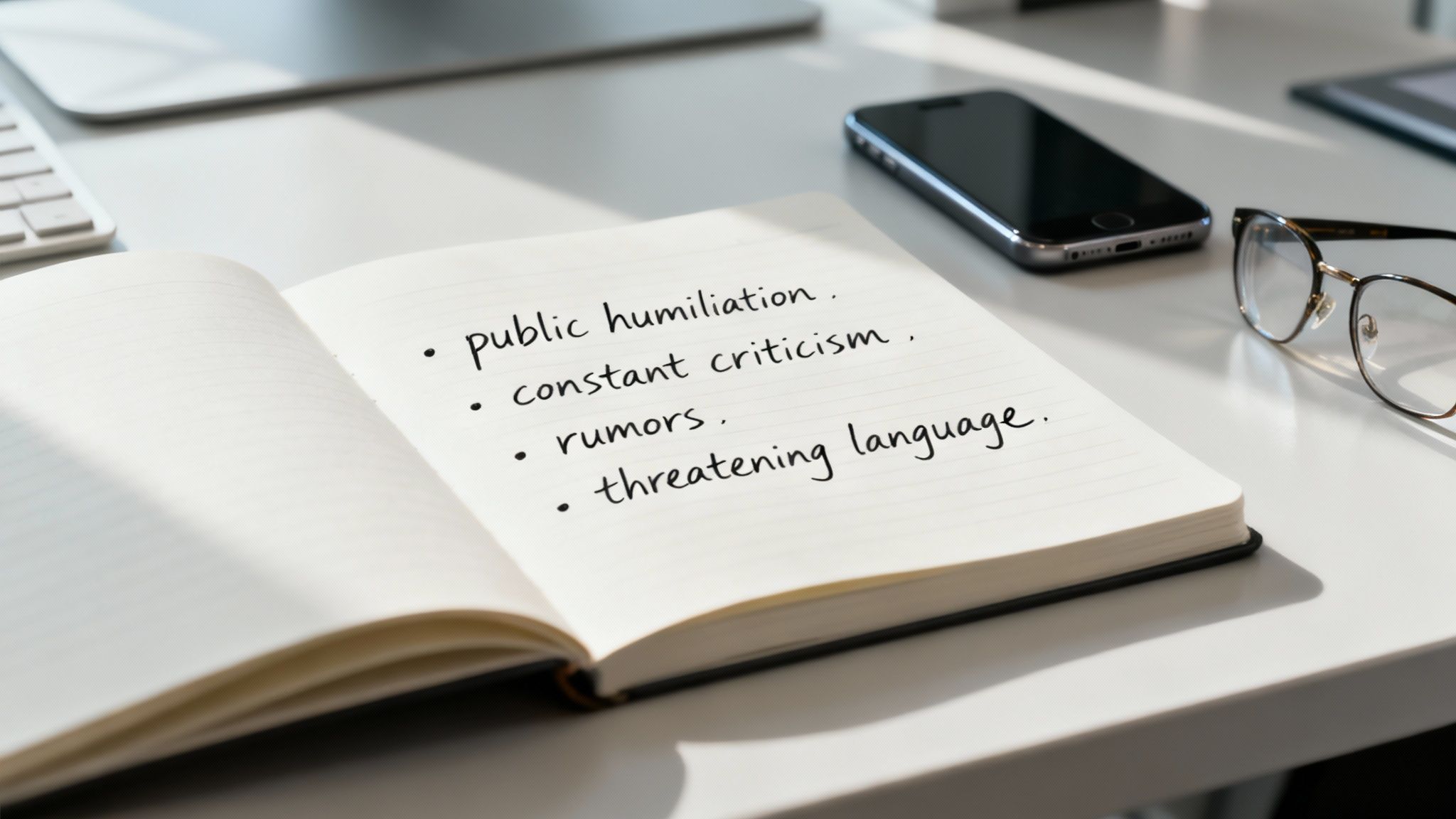
- Constant, Unfair Criticism: This isn't about legitimate feedback. It's a relentless nitpicking of your work, often focusing on tiny mistakes or things that aren't even wrong, making you feel like you can’t do anything right.
- Public Humiliation: Being berated in front of your team in a meeting, called out on a group email, or yelled at within earshot of others is a classic intimidation tactic.
- Threats and Intimidation: This can be direct or veiled. Comments like, "You'd be lucky to still have a job next week if you keep this up," are unambiguous red flags threatening your job security.
- Spreading Malicious Rumors or Gossip: When someone intentionally spreads lies or private information about you, they are trying to poison your reputation and isolate you from your colleagues.
- Dismissing Your Ideas and Contributions: If your input is consistently ignored, ridiculed, or even stolen by a manager who then takes the credit, it's a clear attempt to make you feel invisible and worthless.
Sadly, these experiences are far from rare. A 2023 U.S. study found that a shocking 52% of employees have either experienced or witnessed workplace harassment. Bullying is often at the core of this, with verbal abuse like excessive criticism (49.3%) and outright shouting (42.6%) being common tactics.
And it’s a global problem. One in six workers worldwide reports experiencing psychological harassment, with the abuser being a manager 53.6% of the time. The personal cost is staggering: 45% of targets develop health issues, and 48% suffer a significant loss of self-confidence. You can explore the full findings to understand the scope of workplace misconduct.
What Verbal Abuse Sounds Like in Practice
Sometimes, seeing specific phrases written down can trigger that "aha!" moment, helping you connect the dots of your own experience. The table below lays out some real-world examples to help you identify these harmful behaviors.
Types of Verbal Abuse and Real-World Examples
| Type of Verbal Abuse | What It Sounds Like in the Workplace |
|---|---|
| Undermining and Belittling | "Are you sure you can handle this? Maybe we should give it to someone more capable." |
| Yelling and Aggression | "I don't care about your excuses! Just get it done now, or you're out of here!" |
| Gaslighting | "I never said that. You're being overly sensitive and misremembering things again." |
| Threatening Language | "People who complain around here don't last very long. You should remember that." |
| Personal Insults | "That's a stupid idea. Did you even think before you spoke?" |
Simply being able to name what's happening is a powerful first step in taking back control. It validates your feelings and confirms that you aren't the one at fault. This clarity is crucial as you move forward to document the abuse and decide on your next steps.
When Does Verbal Abuse Cross the Line into Illegal Harassment?
We all know that hurtful words and constant nitpicking can make a job miserable. But at what point does a toxic boss or coworker's behavior stop being just poor management and become illegal? For workers in Mississippi, the answer is found in federal law, which is our primary defense against discriminatory abuse on the job.
It’s a tough reality, but general meanness or yelling in the workplace, as awful as it is, isn't automatically against the law. For the law to get involved, the abuse has to be tied directly to a legally protected characteristic—things like your race, religion, sex, age (if you're 40 or older), or a disability.
The "Severe or Pervasive" Test
Federal law doesn't step in for every rude comment or raised voice. To be considered illegal harassment, the behavior must be either severe (a single, incredibly serious incident) or pervasive (a pattern of smaller incidents that add up over time).
Think of it like this: a one-off nasty remark is like a single pothole you can easily steer around. Annoying, for sure, but you can keep going. But a constant daily barrage of insults and demeaning comments is like driving down a road completely riddled with potholes—it makes the journey impossible and fundamentally changes your ability to get where you’re going. That's when your work environment becomes hostile.
The legal standard is clear: the verbal abuse must create a work environment that a reasonable person would find hostile or abusive, and you, the victim, must also perceive it that way. In short, it has to be bad enough to actually change the terms and conditions of your job.
Once verbal abuse hits this level, it's often illegal harassment. Learning how to combat workplace harassment effectively is crucial for protecting yourself.
Creating a Hostile Work Environment
When severe or pervasive verbal abuse poisons your workplace, the law calls this a "hostile work environment." This isn't just a feeling; it's a specific legal claim where discriminatory harassment is so bad that it gets in the way of you doing your job.
To build a hostile work environment claim based on verbal abuse, you typically have to prove four things:
- You belong to a protected class (based on your race, gender, age, etc.).
- You were subjected to unwelcome verbal harassment.
- The harassment happened because of your protected characteristic.
- The harassment was severe or pervasive enough to create an abusive working atmosphere and alter your employment conditions.
That link between the hurtful words and your identity as a protected person is what takes the behavior from just being unprofessional to being illegal. We go into much more detail in our guide on how to prove a hostile work environment.
Next Steps for Mississippi Workers
Knowing your rights is the first step, but what you do next is critical. Here’s a key piece of information for anyone working in Mississippi: our state does not have its own state-level agency, like a human rights commission, to handle these kinds of discrimination claims.
This means your path to justice runs through the federal government. Your first official step must be filing a formal complaint, called a "charge of discrimination," with the U.S. Equal Employment Opportunity Commission (EEOC).
The EEOC is the federal agency tasked with investigating workplace discrimination claims. Talking to an employment attorney at this stage can make a huge difference. An experienced lawyer can help you figure out if your situation meets the legal standard for harassment, guide you in collecting the right evidence, and make sure your EEOC charge is filed correctly and on time.
Many employment lawyers, including our firm, work on a contingency fee basis. This means you don't pay anything upfront. The attorney's fee, typically 40-50% of the recovery, is only paid if you win your case through a settlement or verdict. This makes getting expert legal help accessible to everyone.
Taking Control: Your Guide to Documenting Verbal Abuse
When you're facing verbal abuse at work, it can feel like you're losing control. The best way to reclaim your power is to turn those chaotic, upsetting moments into a clear, factual record. It’s about building a case, one detail at a time.
Think about this: studies show there’s a good chance someone in your office has witnessed bullying behavior, including harsh verbal attacks. In fact, a staggering 44% of American employees have either been the target of it or seen it happen up close.
What’s even more concerning is that 62% of victims end up leaving their jobs to escape the abuse, yet in 70% of those situations, the bully keeps their position. And who are these bullies? More often than not, they’re supervisors—61% of them, to be exact. The system often fails to hold them accountable, with a tiny 5% of reported incidents ever reaching a real resolution.
Since Mississippi does not have a state-level human rights commission to turn to, the detailed log you create becomes your single most important tool. It's the evidence that forces people to listen. You can learn more from these 2023 workplace harassment findings.
How to Record Each Incident
Every time something happens, you need to create a record. Think of yourself as a journalist covering a story.
Start a new entry with the basics: the exact date, the time it occurred, and where you were. Write down precisely what was said, word-for-word, as best as you can remember. It might feel uncomfortable to write down ugly words, but it’s crucial for accuracy. Then, list everyone who was present and what their role is (e.g., coworker, supervisor).
Context is everything. What was happening right before the incident? What happened immediately after? Small details—a snide comment made earlier in the week, a sudden change to your schedule—can help establish a clear pattern over time.
- Digital Trails: Immediately forward any abusive emails, texts, or chat messages to a personal email address. This creates a copy you control.
- The Human Cost: Make a note of how the incident affected you. Did your heart race? Did you lose sleep that night? This isn't about being dramatic; it's about documenting the real-world impact of the abuse.
- Supporting Files: Attach anything related to the incident, like a copy of a performance review mentioned during the outburst or notes from a witness.
Keeping Your Evidence Safe
This is critical: never store your documentation log on a company computer, server, or network. Keep your records on a personal device, a private email account, or a cloud drive that only you can access. Your employer has no right to this information until you decide to share it.
Pro Tip: Buy an encrypted flash drive. Keep a backup of all your documentation on it and store it somewhere safe, completely away from your workplace.
Digital messages can be deleted in an instant. The moment you see an abusive text or chat message, take a screenshot. Save those screenshots as PDFs and consider adding a password for an extra layer of security.
If a trusted coworker witnessed what happened, pull them aside as soon as possible and ask if they would be willing to write down what they saw and sign it. A contemporaneous, signed statement from a witness is incredibly powerful.
How to Organize Your Timeline
A simple spreadsheet or a dedicated journal works perfectly. Create columns for the date, a description of the incident, who witnessed it, and a reference to any related files (like that PDF of a screenshot). This keeps everything organized and easy to find.
You can even color-code entries—maybe red for severe incidents or yellow for passive-aggressive comments. This can help you and an attorney spot patterns at a glance. Just remember to back up your timeline regularly in more than one secure place.
An Expert's Insight: A well-organized, chronological timeline is often what makes the difference when you file a charge with the federal EEOC. It shows a clear pattern of escalation or retaliation that a single, isolated complaint might not.
As your log grows, the pattern of abuse often becomes undeniable. It’s this pattern that can transform a complaint from something that gets dismissed into a strong, winnable case. With this solid evidence in hand, you'll be ready for the next step: reporting the abuse without fear.
Best Practices for Your Records
Set a reminder to review your notes once a week. It’s easier to fill in missing details or correct errors when the events are still fresh in your mind. As your log gets longer, you can archive older entries, but keep them accessible. You never know when a pattern might span several months or even years.
- If you snap a photo of notes left on a whiteboard, use a clear, descriptive file name so you know exactly what it is later.
- Create a simple master index page at the beginning of your log so you can quickly jump to any specific incident.
Finally, keep this documentation to yourself. Don’t talk about it with coworkers. This log is your leverage, your proof, and your path forward. Being meticulous now empowers you to act with confidence, knowing you have the facts on your side. Stay vigilant.
How to Report Abuse and Protect Yourself From Retaliation
Once you’ve documented everything, you have a powerful tool in your hands. The next step is a tough but necessary one: formally reporting the verbal abuse. This means carefully navigating your company’s internal reporting process while understanding the legal protections you have against any backlash.
Your company handbook is your roadmap here. Before you do anything else, find the section on harassment and grievance procedures. This document should lay out exactly who to report to—it might be an HR representative, a specific manager, or even an ethics hotline—and what the process looks like. Following your company's official procedure is a critical first step.
The infographic below breaks down the core process of gathering the evidence you'll need before you make that report.
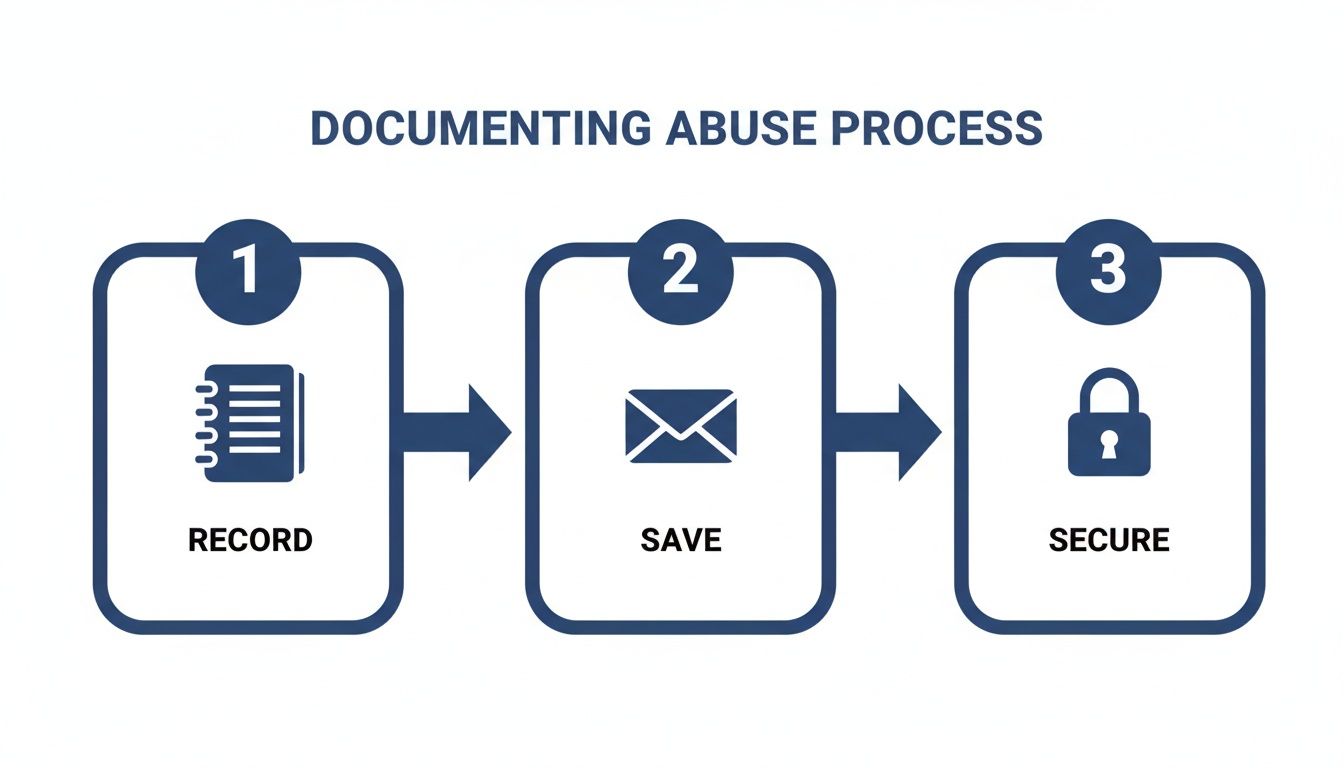
This simple flow—record, save, and secure—is how you turn chaotic, stressful moments into organized, credible evidence that can give your claim real weight.
Understanding Your Shield Against Retaliation
Let's be honest: the biggest fear that stops people from speaking up is retaliation. What if you get fired? What if they cut your hours or suddenly move you to the worst shift? These are completely valid concerns, but federal law provides a powerful shield for employees who report harassment in good faith.
Key Takeaway: It is illegal for your employer to punish you for reporting what you reasonably believe to be unlawful harassment or for participating in an investigation. This is one of the strongest protections you have as a worker.
This protection is absolutely vital. People in frontline roles—think retail, food service, or healthcare—are constantly dealing with verbal abuse from customers and coworkers. A 2023 survey found that a shocking 87% of workers experienced this in the last year alone. When these incidents involve racism, a clear form of verbal abuse, the numbers are even more concerning; 61% of Black employees witness it, which is double the overall average. Knowing that federal law protects you when you report this kind of behavior is the first step toward taking action.
What Does Illegal Retaliation Look Like?
Retaliation isn’t always as obvious as getting fired on the spot. It often takes subtle forms, but all of them are illegal if they are a direct response to you making a complaint.
Examples of illegal retaliation can include:
- Termination: Getting fired shortly after you report the abuse.
- Demotion: Being moved to a lower-paying or less prestigious position.
- Negative Performance Reviews: Suddenly receiving poor reviews after a history of good performance.
- Increased Scrutiny: Being micromanaged or unfairly disciplined for minor things that were never an issue before.
- Schedule Changes: Having your hours cut or being assigned to undesirable shifts no one wants.
In many cases, a retaliation claim can be even stronger than the original harassment complaint. Why? Because it's often easier to draw a direct line between your protected activity (reporting the abuse) and the negative action your employer took against you. For a deeper dive, check out our guide on how to report workplace harassment.
If you start facing any of these actions, document them with the same diligence you used for the verbal abuse. Note the date, time, what happened, and who was involved. This creates a separate, powerful record of illegal conduct, giving you another layer of legal protection as you stand up for your rights.
When You Should Contact an Employment Lawyer
You’ve done everything right. You documented the verbal abuse, you followed your company’s internal reporting procedures, and you stood up for yourself. But what if nothing changes?
Knowing when to shift gears from handling things internally to getting professional legal help is a crucial step in protecting your career and your peace of mind. Taking that step can feel daunting, but it's often the most logical and empowering move you can make. If your employer has ignored your complaints, if the abuse hasn't stopped, or if you've been punished for speaking up, it's time to talk to a lawyer.
Clear Signals It Is Time for Legal Advice
Sometimes the signs are impossible to miss, like getting fired right after you file a complaint. Other times, they're more subtle but just as serious. If the constant stress from the workplace verbal abuse is taking a toll on your physical or mental health—causing anxiety, depression, or sleepless nights—that’s a huge red flag.
You should seriously consider calling an attorney if:
- Your Internal Complaints Go Nowhere: You reported the abuse through the right channels, but management did nothing meaningful to stop it.
- The Abuse Continues or Escalates: Despite your efforts to resolve it, the insults, threats, or belittling remarks just keep coming.
- You're Facing Retaliation: After you reported the harassment, you were suddenly demoted, had your hours cut, received a bogus performance review, or were even fired.
- Your Health Is Suffering: The toxic environment is causing you significant emotional distress or even physical health problems.
In any of these situations, an experienced employment lawyer isn't just an advocate; they become a necessary partner to help you navigate a confusing and often intimidating system.
Why a Mississippi Employment Lawyer Is Essential
For anyone working in Mississippi, having local legal expertise is absolutely critical. As we've covered, Mississippi does not have a human rights commission or any state-level agency that handles workplace harassment claims. This means your only avenue for justice runs through the federal Equal Employment Opportunity Commission (EEOC).
An attorney who specializes in Mississippi employment law knows this federal process cold. They can review your evidence, figure out if your situation meets the legal standard for a hostile work environment or retaliation, and make sure your EEOC charge is filed correctly and on time. Those deadlines are strict.
You don't have to face this process alone. An experienced attorney can manage the complexities of an EEOC filing, handle communications with your employer, and build the strongest possible case on your behalf, giving you the space to focus on your well-being.
A lot of people hesitate to call a lawyer because they're worried about the cost. I get it. But most employment attorneys, including our firm, work on a contingency fee basis. This means you pay no upfront fees for our services.
The attorney's fee, typically 40-50% of the total recovery, is only paid if you win your case through a settlement or a court verdict. This approach ensures that everyone has access to justice, no matter their financial situation. For a deeper dive, check out our article on why early legal support can change your job dispute outcome.
Common Questions About Verbal Abuse on the Job
When you're dealing with verbal abuse at work, it's natural to feel overwhelmed and unsure of what to do next. You have questions, and getting clear, practical answers is the first step toward protecting yourself. Here’s a look at some of the most common concerns we hear from Mississippi employees.
What If the Abuse Isn’t About My Race or Gender?
This is a really tough spot to be in. A lot of people find themselves working for a "yeller" or a boss who is just plain hostile to everyone, regardless of who they are. While this behavior is undeniably toxic, it might not be illegal under federal law.
The law typically steps in when the abuse is directly tied to a protected characteristic, like your age, religion, or a disability. However, that's not always the end of the story. If the verbal attacks are truly extreme or if they started right after you did something protected—like reporting a safety violation—you might still have a case. The only way to know for sure is to talk through the specific details with an attorney who understands these nuances.
How Long Do I Have to File a Harassment Claim?
The clock starts ticking immediately, and the deadlines are unforgiving. In Mississippi, you generally have just 180 days from the last incident of illegal harassment to file a formal charge with the U.S. Equal Employment Opportunity Commission (EEOC).
Think of this as a hard-and-fast deadline. If you miss it, you likely lose your right to take legal action for the harassment forever. It is absolutely critical to act quickly.
This short timeframe is exactly why documenting every incident as it occurs and seeking legal advice promptly is so important. A lawyer can help make sure all the paperwork is filed correctly and on time, so your rights are preserved.
Can My Boss Fire Me for Reporting Verbal Abuse?
Absolutely not. Federal law has strong anti-retaliation protections for employees who report harassment or discrimination in good faith. It is illegal for an employer to punish you for speaking up.
This includes firing you, demoting you, cutting your hours, or taking any other kind of negative action because you made a complaint or helped with an investigation. In many cases, the retaliation claim ends up being even stronger than the original harassment complaint. If you report abuse and suddenly find yourself out of a job a week later, that’s a massive red flag for illegal retaliation.
If you're facing verbal abuse at work and feel like your voice isn't being heard—or worse, that you're being punished for speaking out—you don't have to go through it alone. The dedicated team at Nick Norris, P.A. is here to stand up for the rights of Mississippi workers. Contact us today for a confidential consultation to understand your options and get the advocacy you deserve.
This article has been reviewed for legal accuracy by Nick Norris. For employment law matters in Mississippi, consult with an attorney licensed to practice in your state.
Leave a Reply