
Your Guide to Employee Owned Company Benefits in Mississippi
A Mississippi worker sees “employee-owned” in a job posting and assumes it means safety, influence, and a better future. Sometimes it does mean a real chance to build wealth over time. Sometimes it means little more than a benefit plan with rules that are hard to understand until you need the money, lose the job, or discover that ownership on paper doesn't give you much say at work.
That gap matters more in Mississippi than many employees realize. Mississippi is still an at-will employment state. Being called an owner usually doesn't change that. If a company offers stock, an ESOP, or some kind of shared ownership, you need to know what you're getting, what rights attach to it, and where the risk lands if the business stumbles.
An Introduction to Employee Ownership in Mississippi
A worker in Gulfport accepts a job because the offer includes one phrase that sounds safer than a plain paycheck: “employee-owned.” The assumption is easy to understand. If employees have a stake in the business, the company should be more careful with jobs, more transparent about money, and more willing to share success.
Sometimes that is true. A well-designed ownership plan can give a worker a retirement benefit that grows with the company and creates real long-term value. It can also push management to focus on stability instead of short-term numbers. But in Mississippi, the sales pitch deserves a harder look because ownership status usually does not change the basic employment relationship.
Mississippi remains an at-will employment state. In plain terms, a company can still terminate employment for many reasons that feel unfair, so long as the reason is not illegal. Calling workers “owners” does not automatically give them job security, voting power, or a meaningful voice in daily decisions. That is why the state-law context matters as much as the plan brochure. A good starting point is this overview of Mississippi labor laws.
That Mississippi angle gets missed in a lot of employee-ownership discussions. Federal law may govern parts of an ESOP or retirement plan, but your day-to-day risk still sits inside Mississippi's employer-friendly rules. If you lose the job before you are vested, if your payout is delayed under plan terms, or if the company becomes financially strained, “employee-owned” may offer less protection than the label suggests.
Benefits also work together in practice. Ownership interest, health coverage, retirement contributions, and disability protection all affect what a job is worth. If you want a practical snapshot of how regional coverage environments can differ, this comparison of Compare MS AL insurance markets shows why two offers that look similar at first can produce very different financial outcomes.
Employee ownership can build wealth. It can also concentrate risk in the same employer that controls your paycheck.
What Employee Ownership Actually Means
“Employee-owned” is a broad label. Before you can judge the value, you need to know which model you're dealing with.
ESOPs
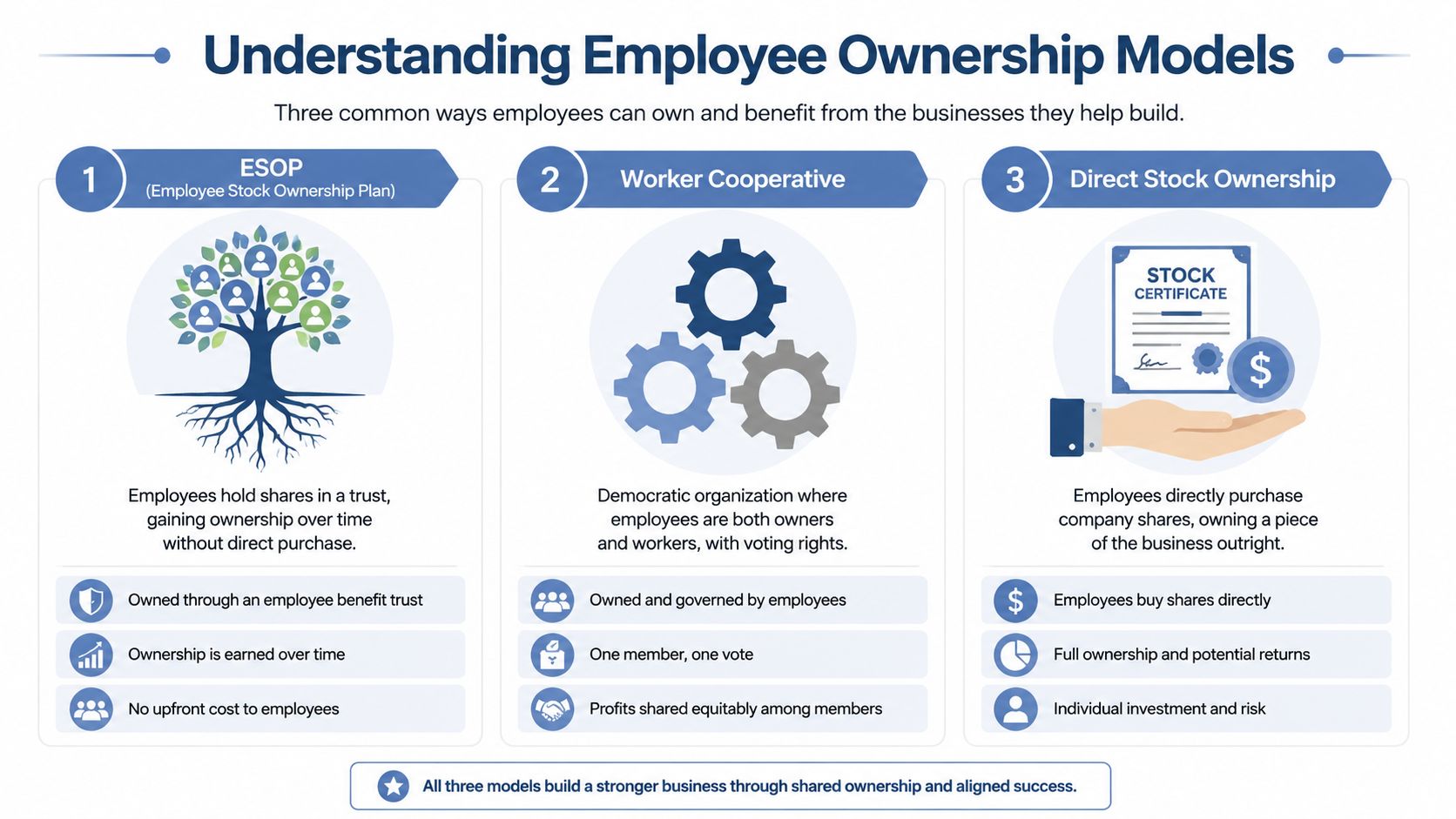
An Employee Stock Ownership Plan, or ESOP, is usually best understood as a retirement plan that invests primarily in your employer. In many cases, the employee doesn't go out and buy the shares with personal cash. Instead, shares are held in a trust for employees, and the employee's benefit builds over time under plan rules.
That's very different from having a brokerage account with company stock you can trade whenever you want. An ESOP is structured, regulated, and usually tied to vesting and payout rules. It's closer to a retirement benefit than a checking account.
Worker cooperatives
A worker cooperative is more like being part employee and part member-owner of the business itself. These models usually emphasize voting rights and shared governance. If an ESOP is a retirement-style benefit tied to company equity, a co-op is more like joining a business where workers also act as the ownership base.
In plain terms, a co-op tends to say, “You work here and help govern here.” An ESOP often says, “You work here and build an ownership benefit here.”
Direct stock ownership programs
Some companies use direct equity compensation. That can include stock grants, stock options, restricted stock, or similar arrangements. In that model, the employee more directly holds or can earn an individual stake in the company.
This setup often feels more immediate, but it can also be more exposed to market swings, transfer restrictions, repurchase rules, and tax complications depending on the plan design.
Why the distinction matters in Mississippi
A worker in Mississippi should ask one question before anything else: “What kind of ownership is this, exactly?”
A short comparison helps:
| Model | What it usually feels like | Main issue to ask about |
|---|---|---|
| ESOP | Retirement-style ownership benefit | Vesting, valuation, payout timing |
| Worker cooperative | Employment plus member governance | Voting rights, bylaws, profit allocation |
| Direct stock ownership | Individual equity stake | Purchase terms, sale rights, restrictions |
If the employer can't explain the structure in plain English, that's a warning sign. A serious ownership program should be easy to describe without buzzwords.
The Major Benefits of Employee Ownership
A Mississippi worker usually sees the upside of employee ownership in one of two moments. The first is years later, when an account statement shows real value that ordinary wages alone would not have built. The second is during a sale, retirement, or layoff, when the worker learns whether the company's promises were backed by plan documents, valuation rules, and payout terms that actually protect employees.
That is the right way to view the benefits. Employee ownership can create real financial gains, but the benefit is usually delayed and plan-specific.
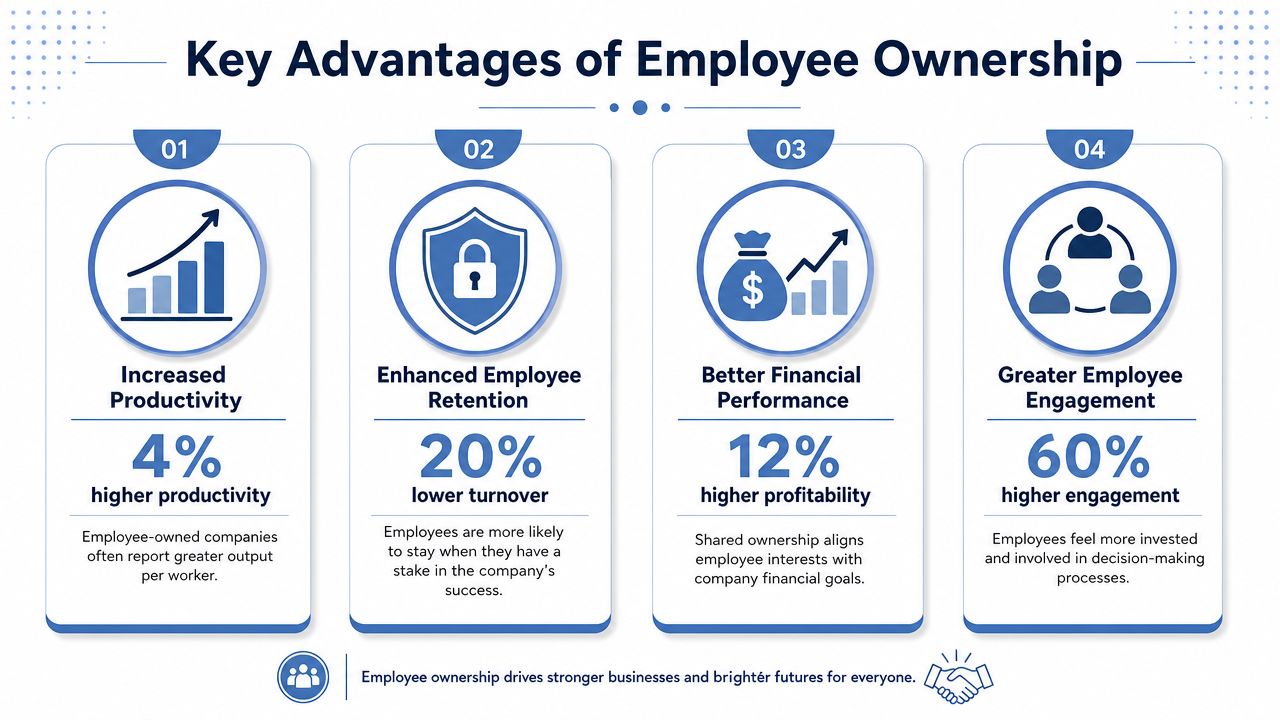
Research summarized by the National Center for Employee Ownership found higher median income, higher household net wealth, and longer job tenure among employee owners compared with comparable non-owners. The same summary reports that S-corporation ESOP sponsors contributed more to retirement plans than companies offering only a 401(k). You can review those findings in the NCEO research summary on employee ownership.
A chance to build wealth beyond wages
For many Mississippi families, paycheck-to-paycheck pressure is real. A pay raise helps with current bills. An ownership stake, if the business performs well and the plan is set up properly, can add a second layer of value that grows over time.
That matters in a state where many workers do not have much room for financial mistakes. A sound ESOP or equity plan can give an employee a retirement asset tied to the company's long-term performance, not just current compensation.
The trade-off is timing. Workers often earn the value slowly through vesting and may not receive the money until separation, retirement, disability, or another plan-triggered event. If an employer asks you to sign away claims as part of that exit process, read the terms carefully and compare them against a separation and release agreement before you give up rights for a payout you may already be owed.
Better retention and a stronger reason to stay
Ownership plans often help keep trained employees in place. That is good for the company, and it can be good for workers who want more stability, better succession planning, and a reason for management to invest in people who know the business.
In practice, I see this benefit most clearly in established companies where ownership is part of a real operating model. Management explains the plan. Annual statements are understandable. Employees know what affects value. Supervisors treat turnover as a cost, not as a routine feature of doing business.
Mississippi workers should still keep one point in view. Longer tenure is only a benefit if the job itself is worth keeping. In an at-will state, ownership does not erase the employer's broad power to terminate employment unless a contract or specific law limits that power.
A stronger connection between daily work and long-term value
Employee ownership can improve behavior inside a company. Waste matters more. Customer retention matters more. Training matters more. Workers who know they share in the company's success often pay closer attention to the choices that affect profit and value.
That benefit is real, but it depends on transparency. If employees never see valuation updates, never hear how shares are allocated, and never get a straight answer about vesting, the ownership label does not do much work on its own.
Here's a short explainer if you want a general overview before digging into plan documents:
Benefits workers actually feel
The best plans usually produce a few practical advantages:
- Retirement accumulation: Ownership can add to a 401(k) or other benefits instead of leaving retirement savings entirely on the worker.
- More company stability: A business with an ownership transition plan may be less likely to face the disruption that comes with an outside sale or abrupt succession crisis.
- A measurable stake: Employees often pay closer attention to quality, efficiency, and client relationships when those factors may affect the value of their accounts.
Practical rule: If the company talks about ownership in broad motivational terms but will not explain the formula for earning value, vesting, valuation, and payout timing, the benefit has not been explained well enough.
In Mississippi, that warning matters more than many articles admit. A company can promote an ownership culture and still operate under at-will rules that leave workers with limited job security. The actual benefit is not the slogan. It is the written plan, the financial disclosures you can understand, and the legal rights you can prove.
Real World Risks and Financial Downsides
Employee ownership has a clean public image. The hard part is that the same feature that creates upside can also create concentration risk. If your paycheck and a large part of your retirement value both depend on one employer, a business downturn can hit you twice.

Liquidity is often the first surprise
Many employees hear “ownership” and assume access. That's often wrong. A key trade-off is wealth-building versus liquidity. CSG Partners notes that while ESOPs can double retirement balances compared to 401(k)s at other firms, employees must understand the risk of overexposure to one stock and the fact that access to funds often doesn't come until they leave the company or retire, as explained in this discussion of employee ownership's impact and liquidity trade-offs.
That can create tension for workers who need cash now, not at retirement. It can also create disappointment when someone assumes “my shares” work like money in a bank account.
Ownership does not always mean control
A financial interest and management authority are different things. An employee may have an account balance, a vested benefit, or stock rights without any meaningful role in daily decisions.
That misunderstanding causes problems. Workers sometimes believe the phrase “employee-owned” means management has to hear them out, justify major moves, or protect them from arbitrary decisions. In Mississippi, that assumption can be dangerous.
If you can be terminated under at-will rules, ownership language by itself doesn't override that reality.
Vesting, forfeiture, and exit terms
Three plan mechanics deserve close attention:
- Vesting schedule: If you leave early, you may not keep the full value credited to you.
- Repurchase rules: Some plans control when and how the company buys back your shares or account value.
- Valuation timing: The number on paper may change based on annual valuation methods and plan rules.
A worker facing termination should also read any post-employment paperwork carefully. Some disputes over benefits, releases, and final terms become harder once a document is signed. This overview of a separation and release agreement is useful if your departure and your ownership benefit become part of the same conversation.
What does not work
Poor employee ownership plans tend to share a pattern. The company markets the upside, stays vague about vesting, avoids clear answers about valuation, and acts offended when employees ask detailed questions.
That is not sophistication. That is opacity.
How to Evaluate an Employee Ownership Plan in Mississippi
A Mississippi worker gets offered a job, hears the company is employee-owned, and assumes that means more security, more voice, and a better long-term deal. Sometimes it does. Sometimes it means you are tying part of your financial future to the same employer that can still fire you under Mississippi's at-will rules.
That is the frame to use when you evaluate the plan. Start with the documents, not the sales pitch. If the company wants credit for employee ownership, it should explain the structure in plain English and hand over the paperwork that controls your rights.
Questions worth asking before you sign on
Ask direct questions and expect direct answers.
What kind of plan is this, exactly?
An ESOP, stock bonus plan, profit-sharing arrangement, and direct share purchase program do different things. The label matters because your tax treatment, payout rights, and legal protections may change with the structure.What do I have to do before the benefit is mine?
Get the vesting schedule in writing. Then ask what happens if you quit, get terminated, become disabled, retire, or the company sells.Who decides what my ownership interest is worth?
Ask how valuation works, how often it happens, and whether you can review the summary plan description or valuation-related disclosures available to participants.When can I get paid?
Some plans build value for years before you can touch it. That may be fine if you are comparing it to retirement savings. It is a problem if you are treating it like accessible compensation.What rights do employees have to raise concerns together?
Even in an at-will state, workers may still have rights to act together about workplace terms and benefits. Read more about protected concerted activity in the workplace if employees are being discouraged from asking group questions about the plan.
Read the plan like a legal document
Do not stop at the brochure. Ask for the governing plan document, the summary plan description, any stock agreement, repurchase policy, distribution rules, and election forms.
Then look for a few pressure points:
- Payout triggers: What event causes distribution, and how long can the company wait?
- Repurchase rules: If you receive shares, can the company force a buyback, and at what price?
- Restrictions: Can you sell, transfer, or pledge the interest, or are you locked in?
- Interaction with other benefits: Does this replace retirement contributions, bonuses, or cash compensation you would otherwise receive?
- Claims procedure: If there is a dispute, what is the deadline and process for challenging a denial?
Many workers need a practical starting point on federal benefit rules. This simple guide to ERISA compliance can help you understand the vocabulary before you decide whether the company's answers make sense.
Use a Mississippi risk test
Here is the question I tell workers to ask: if this job ends badly, what do I still keep?
That question matters more in Mississippi than in states with broader employee protections. If your ownership benefit depends on staying employed for years, and the company keeps broad discretion over termination, the plan may carry more risk than the recruiting pitch suggests. A good plan can still be worth it. You just need to price in the distinct possibility that your job could end before the benefit fully matures.
Watch how management reacts when you ask for details. Clear written answers usually signal an organized plan. Vague answers, changing explanations, or irritation when employees ask follow-up questions usually signal trouble.
Employee ownership can be a strong benefit. It is only a strong benefit when you know what you own, when you get it, what can make you lose it, and how Mississippi employment realities affect the bargain.
Protecting Your Rights in an Employee Owned Company
A worker in Mississippi can spend years building an ownership stake, then get called into a meeting on Friday and be told the job is over. That is the hard reality behind employee ownership here. If part of your retirement or wealth is tied to your employer, you need to protect both your paycheck and your paper trail.
Employee ownership can create real value. It can also create a conflict when the same company controls your job, the flow of information, and, in some plans, the timing and terms of what you receive. In Mississippi, that risk deserves closer attention because at-will employment gives many employers broad room to end the relationship unless a specific law or contract limits that power.
Warning signs that deserve quick action
Some disputes are just disappointment over plan terms. Others point to a legal or fiduciary problem. I tell workers to pay close attention when any of these show up:
- Valuation problems: The company says business is strong, but your account value drops or the share price looks artificially low.
- Interested decision-makers: The people making plan decisions appear to benefit from keeping employee payouts down.
- Termination near a vesting or payout date: Timing matters, especially when separation happens right before a benefit becomes more valuable.
- Missing documents or shifting explanations: If basic plan rules, summaries, or payout standards are hard to get in writing, treat that as a warning.
- Pressure not to ask questions: A good plan can withstand scrutiny. A bad one often depends on employee silence.
Mississippi law changes the practical risk
Mississippi workers often overestimate how much state law protects them from unfair treatment. In many situations, it does not. Employment is usually at will, and employee ownership by itself usually does not give you job security, a guaranteed payout date, or a separate right to stay employed until benefits mature.
That makes documentation much more important here than many workers expect. Save plan summaries, account statements, benefit notices, emails about valuation, termination paperwork, and notes from meetings. If several employees are raising the same concern about plan treatment or compensation, learn what counts as protected concerted activity. Group complaints can trigger rights that a worker acting alone may miss.
Workers who want a plain-English starting point on benefit-plan rules should review this simple guide to ERISA compliance.
What to do if something feels off
Ask for written documents first. Verbal reassurance is not enough when your ownership interest is on the line.
Request the summary plan description, vesting schedule, distribution rules, valuation process, and claims procedure. If the company denies a document request, gives inconsistent answers, or changes its story after you ask follow-up questions, preserve that record. Those details matter if a dispute later turns on whether the plan was administered fairly.
Legal review makes sense when the numbers do not add up, when key documents are withheld, or when a firing, layoff, or demotion affects an ownership benefit that was close to vesting or payout. In those cases, the question is usually whether the employer made a business decision, or whether someone interfered with a protected benefit or mishandled duties owed to plan participants.
Frequently Asked Questions for Mississippi Employee Owners
Does being an employee owner protect me from being fired in Mississippi
No. In most situations, Mississippi employment remains at will. Being part of an ownership plan usually does not create guaranteed job security by itself.
If I'm laid off, do I lose my stock or ESOP benefit
It depends on the plan's vesting rules and payout terms. Some benefits stay with you once vested. Others may be reduced or delayed depending on the governing documents and the reason for separation.
Can I cash out whenever I want
Often, no. Many employee ownership arrangements are not liquid in the way workers expect. Access may depend on retirement, termination, disability, or other plan-specific triggers.
Does employee ownership mean I get a vote on company decisions
Not necessarily. Some models, especially cooperatives, may include meaningful voting rights. Others give you economic value without day-to-day control over management.
What if I think the company is not treating employee owners fairly
Start with documents. Ask for the plan terms, valuation information, summary descriptions, and written explanations of how decisions are made. If the answers don't line up, preserve your records.
Workers who want a broader non-Mississippi-specific overview of minority-owner concerns may find this article on protecting shareholder investments helpful for understanding how ownership interests can become vulnerable when control sits elsewhere.
How much does it cost to hire a lawyer for an ESOP or employment-related ownership problem
Many Mississippi workers worry they can't afford help. In contingent-fee matters, the average contingency fee is often 40% to 50%. Fee structure depends on the type of claim, the strength of the case, and whether the matter is handled as an employment dispute, a benefits dispute, or both. Ask that question early, and ask for the arrangement in writing.
Is there a Mississippi claim for retaliation if I file a workers' compensation claim
No. Mississippi does not provide a retaliation claim solely for filing a workers' compensation claim. Employees often assume that protection exists automatically. It doesn't.
What is the smartest way to approach an employee ownership offer
Don't react to the label. Read the documents, ask how value is calculated, ask when money is paid, and ask what happens if your employment ends sooner than planned. The best employee owned company benefits are transparent. The weak ones depend on employees staying impressed and uninformed.
If you're a Mississippi worker dealing with termination, retaliation, disputed benefits, or questions about an employee ownership plan, Nick Norris, P.A. helps employees understand their rights and evaluate whether a workplace problem has become a legal claim.
This article has been reviewed for legal accuracy by Nick Norris. For employment law matters in Mississippi, consult with an attorney licensed to practice in your state.
Leave a Reply