
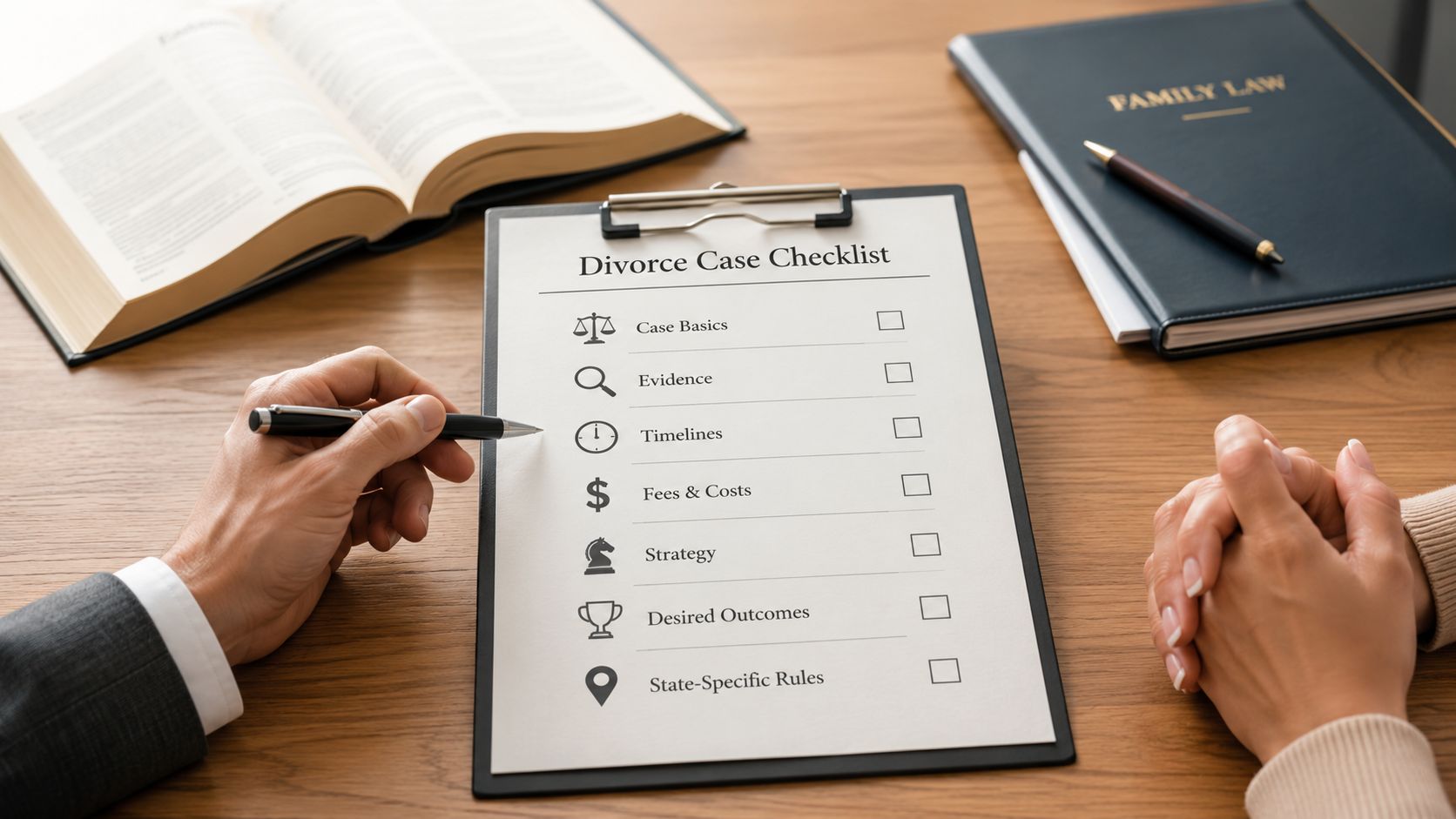
What should you ask first when a workplace problem feels serious, but you're not yet sure whether it's discrimination, retaliation, unpaid wages, or something else? In Mississippi, that first conversation matters because the legal label controls the deadline, the proof, and the remedy. A good consultation is less about telling your story from start to finish and more about helping a lawyer quickly spot the right claim, the right documents, and the right next move.
That's especially true here because Mississippi workers face a mix of federal protections, state limits, and practical intake issues that can change the whole direction of a case. The modern framework for these questions traces back to Title VII of the Civil Rights Act of 1964, later statutes like the ADEA, PDA, ADA, and FMLA, and the deadlines and remedies those laws created in the first place (employment-law framework overview). If you're comparing options, it helps to bring focused questions, not just a rough narrative. For a separate career-prep angle, you can also look at this related guide on nursing manager interview prep 2026.
By Nick Norris, Attorney
Reviewed by Nick Norris
Last updated: July 25, 2026
What Types of Discrimination Are Illegal in Mississippi Workplaces?
Mississippi employees usually need to begin with a different question, what protected trait was involved? Federal law does most of the work here. Title VII bars discrimination based on race, color, religion, sex, and national origin, while the ADEA protects against age discrimination, the ADA covers disability, and GINA protects genetic information.
Mississippi does not have a human rights commission. In most cases, workers bring discrimination claims through the EEOC under those federal statutes. That makes the first consultation more focused than many people expect. A worker may know the treatment felt unfair, but a lawyer still has to identify whether the issue is race discrimination, sex-based bias, age, disability, or retaliation tied to a complaint or request for help.

Questions that help a lawyer sort the claim
A Mississippi employment lawyer will usually want the facts in a tighter form than a general complaint. The strongest questions connect the conduct to a protected category and a timeline. That helps separate a bad management decision from a legally actionable claim.
Practical rule: The best discrimination intake starts with dates, witnesses, documents, and the protected trait you think was targeted.
- What happened, and when did it happen? Dates help connect the conduct to filing deadlines and show whether the problem was isolated or repeated.
- Who saw it? Witness names can turn a one-person account into proof the employer has to answer.
- What did you report, and to whom? A written report to HR or management often matters later, especially if the company says it never knew.
- What documents exist? Emails, texts, reviews, schedules, and policy handbooks may show the actual reason for the decision.
- Did anything change after you complained? A schedule cut, write-up, demotion, or termination can point to retaliation.
A worker should not downplay conduct just because each incident seemed small at the time. Repeated comments, repeated exclusion, or repeated discipline can matter more than one dramatic event. If the same supervisor keeps singling out the same employee, changing assignments, or making comments tied to a protected trait, the pattern may be more important than any single interaction.
For examples of how those fact patterns can look in real cases, see these employment discrimination examples.
What Constitutes Sexual Harassment and a Hostile Work Environment in Mississippi?
Sexual harassment isn't limited to one dramatic incident or one crude remark. It can include unwanted advances, sexual comments, touching, pressure for sexual favors, or conduct that becomes severe or pervasive enough to change the terms of employment. In a Mississippi workplace, the key question is whether the behavior crossed from offensive into legally actionable conduct.
The fact pattern matters a lot. A supervisor who repeatedly comments on a subordinate's body, a workplace where obscene jokes are routine, or a manager who ties promotions to sexual access can create a hostile environment. Retaliation after a report is a separate issue, but it often arrives in the same case file.
If you're dealing with this kind of conduct, the question isn't only “Was it inappropriate?” It's also “Can I prove it, and did the employer respond once it knew?” That's why written complaints and preserved texts matter so much. A verbal complaint that leaves no trail gives the employer more room to deny what happened later.
What to preserve right away
- Written complaints: Send the report to HR or management in writing and keep a copy.
- Text messages and emails: Save everything, including messages that seem minor.
- Dates and locations: Record when the conduct happened and where.
- Witnesses: Identify coworkers who saw or heard the behavior.
- Settlement pressure: Don't rush to sign anything before a lawyer reviews it.
A worker should be cautious about quitting too quickly unless personal safety is at immediate risk. In many harassment cases, the employer's response, or lack of response, becomes just as important as the conduct itself. If the employer ignores the report, jokes about it, or blames the employee, that can change the case significantly.
For a deeper comparison of harassment claims, review quid pro quo versus hostile work environment.
What Are My Rights Regarding Unpaid Wages and Overtime in Mississippi?
Mississippi workers often ask this question after a paystub looks wrong or a salary title doesn't match the actual job. The main federal protection is the Fair Labor Standards Act, which requires overtime pay at 1.5 times the regular rate for hours worked over 40 in a week (lawyer statistics and wage context). Because Mississippi doesn't have a separate state minimum wage or overtime law that gives workers a stronger rule, the FLSA usually drives these claims.
A common problem is misclassification. An employee may be paid a salary and called “exempt,” but still spend most of the week doing work that doesn't fit that label. Another common issue is off-the-clock labor, where a worker finishes opening tasks, closing tasks, or after-hours communication without being paid for it.
What to ask during the consultation
The right questions are concrete. Don't just ask whether the lawyer handles wage claims. Ask how they prove them.
- How were you paid? Salary, hourly, commission, or a mix can matter.
- What did your actual duties look like? Job titles don't always control.
- Do you have paystubs and time records? Those documents often drive damages.
- Did you work through meals or after hours? That can affect overtime calculations.
- Was your final paycheck delayed or short? Termination pay issues often show up alongside overtime problems.
A worker should also ask whether any deductions pushed pay below what the law allows. That's especially important when someone is paid hourly and the employer starts removing time for breaks that were never taken. If you suspect underpayment, bring the pay records and any schedule logs to the first meeting.
A practical Mississippi intake is really about comparison, what was promised, what was done, and what the records show. If the story and the paperwork don't line up, a lawyer can spot that quickly and tell you whether the claim is strong enough to pursue.

What Should I Know About FMLA Rights and Leave in Mississippi?
A Mississippi employee usually starts with a simple question, can I take leave and come back to my job without losing my benefits or my position? The Family and Medical Leave Act gives eligible employees at covered employers up to 12 weeks of unpaid, job-protected leave per year for qualifying medical and family reasons. In Mississippi, the first checkpoint is still the same, a covered employer, 12 months of service, and at least 1,250 hours worked.
A lawyer will often begin by sorting out the leave request itself. Was the employer covered, was the employee eligible, and was the reason for leave one that the law protects? A cancer treatment schedule, childbirth, adoption, or certain military family needs can all raise FMLA issues, but the paperwork has to match the reason and the timing.
The harder cases usually involve what happened after the request. Some employers approve leave, then handle it poorly once the absence becomes inconvenient. Others never say the word “FMLA” clearly, even though the employee has given enough information to trigger the employer's duties.
Questions I ask in the first meeting
Did HR treat the leave as FMLA leave? Written designation matters. If the employer never told the employee the absence was protected, that can affect how the claim is analyzed.
Did the employer keep benefits in place when required? Health coverage, premium deductions, and other leave-related details often reveal whether the company handled the leave correctly.
Was the employee restored to the same or an equivalent job? Job restoration is where a lot of disputes start. A return to work that comes with a worse shift, fewer duties, or a cut in status can raise questions even when the employee technically came back.
What happened right after the request or the leave? Pressure from supervisors, missing forms, discipline, or a termination letter right after the request can matter more than a company's general explanation.
What documents exist? Keep the certification, approval letters, emails, text messages, and any note from the doctor in one place. That paper trail often tells the story faster than a long conversation ever will.
Practical rule: Keep every FMLA email, note, certification, and approval letter in one folder from the start.
A Mississippi consultation on FMLA rights is usually about sequence and consistency. If the employer said the leave was approved, then treated the absence as a problem anyway, that tension deserves a close look. The same is true if the employee returned on time but was pushed aside, written up, or terminated soon after. As noted in the employment-law framework overview, the details you bring to the first meeting often determine whether a lawyer can quickly identify a strong claim or rule out one that does not fit the facts.
What Protection Do I Have Against Retaliation at Work in Mississippi?
Retaliation is one of the most common reasons workers call a lawyer, because the punishment often follows the complaint. Mississippi and federal law protect employees when they report discrimination, harassment, safety violations, or illegal conduct, request FMLA leave, seek disability accommodations, or serve on jury duty. An adverse action like termination, demotion, reduced hours, or a bad evaluation can become unlawful when it's tied to that protected activity.
The timing usually tells the story. If an employee complains to HR on Monday and is suddenly written up or cut back the next week, that sequence matters. So does the paper trail. A manager who gives one explanation in person and a different one in writing can create a useful contradiction for the lawyer to explore.
The retaliation question in Mississippi also has an important limit. There is no retaliation claim for filing a workers' compensation claim under the state protection described in the brief, so workers need to ask whether a different federal or state theory fits the facts first.
Useful intake questions
- What protected activity did you engage in? Reporting harassment, refusing illegal conduct, or requesting leave all matter.
- What changed afterward? Termination, demotion, or schedule cuts are the obvious examples.
- How soon did it happen? Timing can reveal motive.
- What reason did the employer give? The stated reason may be inconsistent with the documents.
- Who else was treated differently? Comparators can help show selective treatment.
If you're already seeing retaliation, don't rely on verbal promises that things will calm down. Put the complaint in writing, preserve every message, and record the personnel action as soon as it happens. That gives a Mississippi lawyer more to work with if the employer tries to reframe the situation later.
For workers in this position, the core question isn't whether the workplace feels unfair. It's whether the adverse action lines up with a protected act and whether the evidence can prove that connection.
What Rights Do I Have If I'm Terminated or Face Wrongful Discharge?
Mississippi is an at-will employment state, so employers can usually end employment for any reason or no reason at all. That rule surprises a lot of people, but it doesn't override federal protections or every exception to at-will employment. If the firing involved discrimination, retaliation, refusal to do something illegal, exercise of legal rights, or another public-policy problem, the label may shift from ordinary termination to wrongful discharge.
The consultation needs to get precise. A worker might say, “They fired me for no reason,” but the better question is, “What was happening right before the firing?” A termination during approved FMLA leave, a discharge after reporting harassment, or a separation connected to military service rights all point in different directions.
An employer's handbook, offer letter, or repeated promises can matter too. Sometimes a case starts because the employer promised certain disciplinary steps or job security and then ignored its own process. That doesn't create a claim in every situation, but it's worth asking about.
What to bring and what to ask
- Termination reason in writing: Ask for the employer's stated reason.
- Personnel records: Request evaluations, warnings, and related documents.
- Handbook and agreements: These can show the employer's own rules.
- Protected activity timeline: Put complaints, leave requests, and refusals in order.
- Severance paperwork: Don't sign it without review.
A worker should also be careful not to assume a discharge is automatically wrongful just because it feels harsh. The better question is whether the employer tied the decision to a protected right or violated a legal obligation in the process. That's the distinction an experienced Mississippi employment lawyer will focus on first.
What Should I Know About Disability Rights and Reasonable Accommodations in Mississippi?
Can your employer lawfully ignore a disability-related request, or does Mississippi and federal law require a real response? Covered employers in Mississippi with 15 or more employees must provide reasonable accommodations to qualified employees with disabilities unless the change would create undue hardship. A disability can include a physical or mental impairment that substantially limits a major life activity. In practice, the key issue is often whether the employer understood the limitation and handled the request appropriately.
Reasonable accommodations can take several forms. A flexible break schedule for diabetes management, an assistive listening device, remote work, or a restructuring of certain tasks may all be part of the discussion. The employer is supposed to engage in an interactive process, not refuse the request and move on. When an employee is denied accommodation, punished for asking, or pushed out after disclosure, retaliation may become part of the analysis too.
What to say and what to keep
A strong consultation starts with what was requested and how the employer responded. Vague complaints do not help much.
- Specific request: Say exactly what change you need.
- Medical support: Provide documentation that matches the limitation.
- Interactive process: Save emails showing any back-and-forth.
- Alternative options: Note whether the employer suggested anything workable.
- Adverse reaction: Track whether discipline or termination followed the request.
Put the request in writing, identify the limitation, and keep the medical support together with the employer's response. That record often shows whether the employer tried to work through the issue or treated the request as a problem to ignore.
Mississippi workers often ask whether they should wait to disclose until the problem gets worse. The safer answer is usually no, because an employer cannot respond to an accommodation it never clearly received. If the job becomes impossible without a change, timing and documentation matter just as much as the diagnosis itself. For a practical workplace example, see the related image of a modern home office accommodation setup.
Workers also need to be realistic about the trade-offs. Some accommodations are easy to implement, while others affect scheduling, coverage, or essential job duties. A Mississippi employment lawyer should be able to tell you whether the request is likely to fit the job, whether the employer discussed alternatives, and whether the next step is accommodation, leave, or a different claim. If you are planning for a job change after a denial or separation, the after layoff job hunt with ResumeToJobs can help with the transition.
What Do I Need to Know About WARN Act Layoffs and Mass Terminations in Mississippi?
A sudden layoff feels chaotic because it often is. The WARN Act generally requires covered employers to give 60 days' advance notice before certain plant closings or mass layoffs affecting 50 or more employees within a 30-day period, and the employer must also notify state and local officials (employment-law firms market context). That notice is meant to give workers time to look for new jobs or retrain instead of being blindsided.
In real life, the consultation usually starts with one question, how much notice did you get? If the answer is less than 60 days, the next question is whether the employer met the coverage rules and whether the group layoff meets the statutory trigger. Workers often don't know how many other employees were affected, so gathering that information helps.
Questions to ask after a layoff notice
- How many employees were affected? Coverage depends on the size and scope of the event.
- What date did you receive notice? The notice period matters immediately.
- Did the employer mention plant closure or mass layoff? The wording can be important.
- Were benefits and wages explained? Missing details can affect damages.
- Did the employer notify officials? That's part of the statutory process.
A worker should also ask for payroll records and benefits information right away. If the company shut down fast, those records may be the only clean proof of lost wages and coverage. For laid-off workers who need to move quickly, the related guide on after layoff job hunt with ResumeToJobs can help with the job-search side while the legal review is underway.
WARN cases are often technical, but the first consultation doesn't need to be. It just needs the right dates, the right headcount facts, and enough documentation to show what the employer did and when it did it.
What Rights Do Military Service Members Have Under USERRA in Mississippi?
A National Guard member can return from deployment and find the job already filled, the schedule changed, or the supervisor acting as if military duty was an inconvenience. USERRA is designed to stop that kind of treatment. In Mississippi, it protects employees who serve in the military, the National Guard, or the Reserve components, and it gives them a path back to their jobs when they meet the law's requirements. The core promise is straightforward, service members should be reemployed in their original position or an equivalent one with equal pay, benefits, and seniority after qualifying service. It also prohibits discrimination based on military service and retaliation for asserting those rights.
The questions that matter are concrete. Did the employer know about the service obligation? Did the worker return on time? Was the returning employee placed back into the same role, or pushed into something lesser? Military-rights disputes often turn on the timeline and the employer's response, not on broad statements about fairness.
A Mississippi worker should keep every order, schedule notice, and return-to-work communication. If the company drags its feet, denies reemployment, or blocks promotion because of military service, those details matter immediately. Even a small change in pay or seniority can be important because USERRA protects more than just the right to come back at all. A lawyer reviewing the file will usually want the service records, the employer's messages, and a clean account of what happened after the return date. A good employment-law fee guidance for Mississippi consultations also helps set expectations before the meeting starts.
What to document before the consultation
- Service orders: Bring the documents showing the obligation.
- Employer notice: Save the written notice you gave the company.
- Return details: Record the date you came back and who you spoke with.
- Job placement: Note whether the role and pay matched what you had before.
- Adverse treatment: Keep any messages about demotion, delay, or denial.
The strongest USERRA consultations tend to be the most organized. If you can show the employer knew about the service, knew when you were due back, and still mishandled the reemployment process, the lawyer can move faster on the legal analysis.
What Should I Do If I'm Experiencing Workplace Problems? Steps to Protect Your Rights and Cost of Hiring an Employment Lawyer in Mississippi
Start with a focused intake, not a long retelling. Write out the core facts in order, then gather the documents that show how the employer handled the situation. A Mississippi employment lawyer can usually tell more from a tight chronology and the right records than from a broad complaint that jumps around.
That approach also helps the lawyer sort the problem into the right legal category. A consultation for discrimination, harassment, retaliation, unpaid wages, FMLA, WARN, or USERRA usually turns on a few key facts, not every detail of the job history. The lawyer will want to know what happened, who had decision-making power, what the employer said in response, and whether any deadline is already running.
What a strong intake package usually includes
- Timeline: A short sequence of events with the dates that matter.
- Employer response: Any written reply, meeting note, or investigation outcome.
- Witness list: Names of coworkers or supervisors who saw the key events.
- Status paperwork: EEOC materials, Right to Sue notices, leave forms, or termination paperwork.
- Policies and messages: Handbooks, emails, texts, and written instructions tied to the dispute.
Fee questions deserve the same direct treatment. In Mississippi, contingency arrangements in employment cases often fall in the 40% to 50% range, and the exact terms should be confirmed before you sign anything. A good place to compare those terms with the case type is this employment-law fee guidance page, because the core issue is not just the percentage, but whether the agreement changes if the case settles early, goes into discovery, or reaches trial. Ask what costs are deducted, who advances expenses, and whether the fee applies before or after those costs come out.
Practical rule: Get the fee agreement in writing, read the cost provisions line by line, and ask how the lawyer handles a case that becomes more work than expected.
Mississippi consultations also reward speed. Once a dispute starts, employers keep their own records, memories fade, and deadlines can close quickly. A prompt consultation gives the lawyer a better chance to match the facts to the right claim, flag any state-specific limits, and explain what the agreement means before you commit.
Mississippi Employment Law, 10 Key Questions Compared
| Topic | Implementation Complexity 🔄 | Resource Requirements ⚡ | Expected Outcomes ⭐ 📊 | Ideal Use Cases 💡 | Key Advantages ⭐ |
|---|---|---|---|---|---|
| What Types of Discrimination Are Illegal in Mississippi Workplaces? | Moderate, EEOC process & evidentiary proof required | Documentation, witness statements, possible counsel; timelines strict | ⭐⭐⭐⭐, Back pay, front pay, compensatory damages; injunctive relief possible | Employees facing treatment based on race, sex, age, disability, religion, national origin, genetic info | Federal laws cover wide array of protections; EEOC accessible for employees |
| What Constitutes Sexual Harassment and Hostile Work Environment in Mississippi? | Moderate–High, severity/pervasiveness analysis; employer investigations | Detailed incident logs, witnesses, preserved communications; counsel often needed | ⭐⭐⭐⭐, Compensatory/punitive damages, injunctive relief; strong remedies when proven | Severe or repeated sexual conduct, quid pro quo, hostile environment at 15+ employee workplaces | Well-established legal framework; strict supervisor liability in many cases |
| What Are My Rights Regarding Unpaid Wages and Overtime in Mississippi? | Low–Moderate, statutory FLSA standards simplify claims | Time records, pay stubs, wage history; employer may contest classification | ⭐⭐⭐⭐, Back pay, liquidated damages (double), attorney fees often recoverable | Misclassification as exempt, unpaid overtime, missing final paychecks | Clear statutory rules; strong monetary remedies and fee recovery |
| What Should I Know About FMLA Rights and Leave in Mississippi? | Moderate, eligibility and employer-size rules to verify | Medical certification, notice records, employer benefit documentation | ⭐⭐⭐, Job restoration, benefit continuation, damages for violations | Serious health conditions, childbirth/adoption, military family leave at 50+ employee employers | Job-protected leave with benefit continuation when eligibility met |
| What Protection Do I Have Against Retaliation at Work in Mississippi? | Moderate, proving causal connection and adverse action | Written complaints, timing evidence, personnel records; legal review helpful | ⭐⭐⭐, Reinstatement, back pay, damages when protected activity shown | Reporting discrimination/harassment, requesting FMLA or accommodations, jury duty | Broad protection for many protected activities; burden can shift to employer |
| What Rights Do I Have If I'm Terminated or Face Wrongful Discharge? | High, at-will presumption requires showing illegal motive or exception | Personnel file, communications, evidence of protected activity; lawyer usually needed | ⭐⭐⭐, Reinstatement/back pay if illegal termination proven; limited by at-will rule | Termination after protected activity, public policy violations, implied contract scenarios | Remedies exist for illegal firings; attorney fees recoverable in many cases |
| What Should I Know About Disability Rights and Reasonable Accommodations in Mississippi? | Moderate, interactive process and medical limitation analysis | Medical documentation, specific accommodation requests, ongoing dialogue | ⭐⭐⭐, Accommodations, reinstatement/damages for violations, confidentiality protections | Employees needing schedule changes, assistive tech, remote work, job restructuring | ADA requires interactive process; protects against retaliation for requests |
| What Do I Need to Know About WARN Act Layoffs and Mass Terminations in Mississippi? | Moderate–High, coverage thresholds and notice calculations complex | Proof of employer size, payroll/benefit records, coordination with other employees | ⭐⭐⭐⭐, 60 days' back pay and benefits, liquidated damages; class claims possible | Plant closures or mass layoffs meeting WARN thresholds (100+ employers) | Significant statutory remedy for sudden mass terminations; fee recovery available |
| What Rights Do Military Service Members Have Under USERRA in Mississippi? | Low–Moderate, procedural notice and reemployment timelines matter | Service orders, written notice to employer, documentation of return-to-work | ⭐⭐⭐, Reemployment in equivalent position, back pay and benefits, damages for discrimination | Returning National Guard/Reserve members, military leave reemployment | Applies to all employers regardless of size; strong reemployment protections |
| What Should I Do If I'm Experiencing Workplace Problems? Steps to Protect Your Rights and Cost of Hiring an Employment Lawyer in Mississippi | Low, practical, immediate steps to preserve claims | Time to document, written reports, potential contingency fee arrangement (40–50%) | ⭐⭐⭐, Preserves claims, increases chance of recovery; contingency makes counsel accessible | Any employee facing discrimination, harassment, wage issues, retaliation, or termination | Clear checklist and contingency fee options reduce upfront cost and preserve evidence |
Taking the Next Step with Confidence
The right employment lawyer questions do more than fill time in a consultation. They help you separate a bad workplace experience from a legally actionable claim, and they help your lawyer decide whether the issue sounds like discrimination, harassment, retaliation, unpaid wages, FMLA interference, WARN violations, USERRA problems, or a different kind of wrongful discharge.
In Mississippi, the state-specific limits matter just as much as the federal protections. There's no human rights commission to take over the process for you, contingency fees are commonly in the 40% to 50% range, and there is no retaliation protection under the state rule described here for filing a workers' compensation claim. That makes precision important from the very first conversation. If you walk in with dates, witnesses, documents, pay records, leave papers, and the employer's written explanation, you give yourself a far better chance of getting a clear answer.
You should also remember that a strong consultation is a triage session. The lawyer is looking for the legal theory, the deadlines, the evidence, and the practical path forward. The more direct your questions are, the faster that process gets.
Nick Norris, P.A. represents Mississippi workers in workplace disputes involving discrimination, harassment, retaliation, unpaid overtime, FMLA, WARN, USERRA, and wrongful termination concerns. If you're dealing with a workplace problem and need help deciding what to bring, what to ask, and what law may apply, call 601-641-4897 to schedule a complimentary case review and get the next step in focus.
If you need help turning a workplace problem into a clear legal plan, Nick Norris, P.A. can review the facts, explain the Mississippi and federal issues that may apply, and help you organize the evidence before deadlines start to close in. Visit Nick Norris, P.A. to request a consultation and get practical guidance on your next move.
Leave a Reply