

Leave of Absence Request: A Mississippi Employee’s Guide
Your phone rings before work. A parent needs help after a medical emergency. Your doctor tells you surgery can’t wait. Your child’s school calls, and everything changes in one afternoon. In that moment, most Mississippi employees aren’t thinking about legal terminology. They’re thinking, “How do I ask for leave without losing my job?”
That’s where a leave of absence request becomes more than paperwork.
For many workers in Mississippi, the problem isn’t just getting time off. It’s figuring out whether the leave is protected, how to ask the right way, and what to do when HR stalls, denies the request, or treats you differently when you come back. A lot of online advice stops at “fill out the form.” That’s not enough when your paycheck, health insurance, and job security are on the line.
A proper leave request should create a record, trigger the right legal protections, and put your employer on notice. If the employer mishandles it, that record may become the backbone of an FMLA or USERRA claim.
Are You Eligible for Protected Leave in Mississippi?
Mississippi private-sector employees usually look to federal law, not a state family-leave statute, for job-protected leave. Mississippi does not have its own private-sector family and medical leave law that replaces or expands the federal baseline. That means your first question is whether your situation fits under FMLA or, in military-related situations, USERRA.
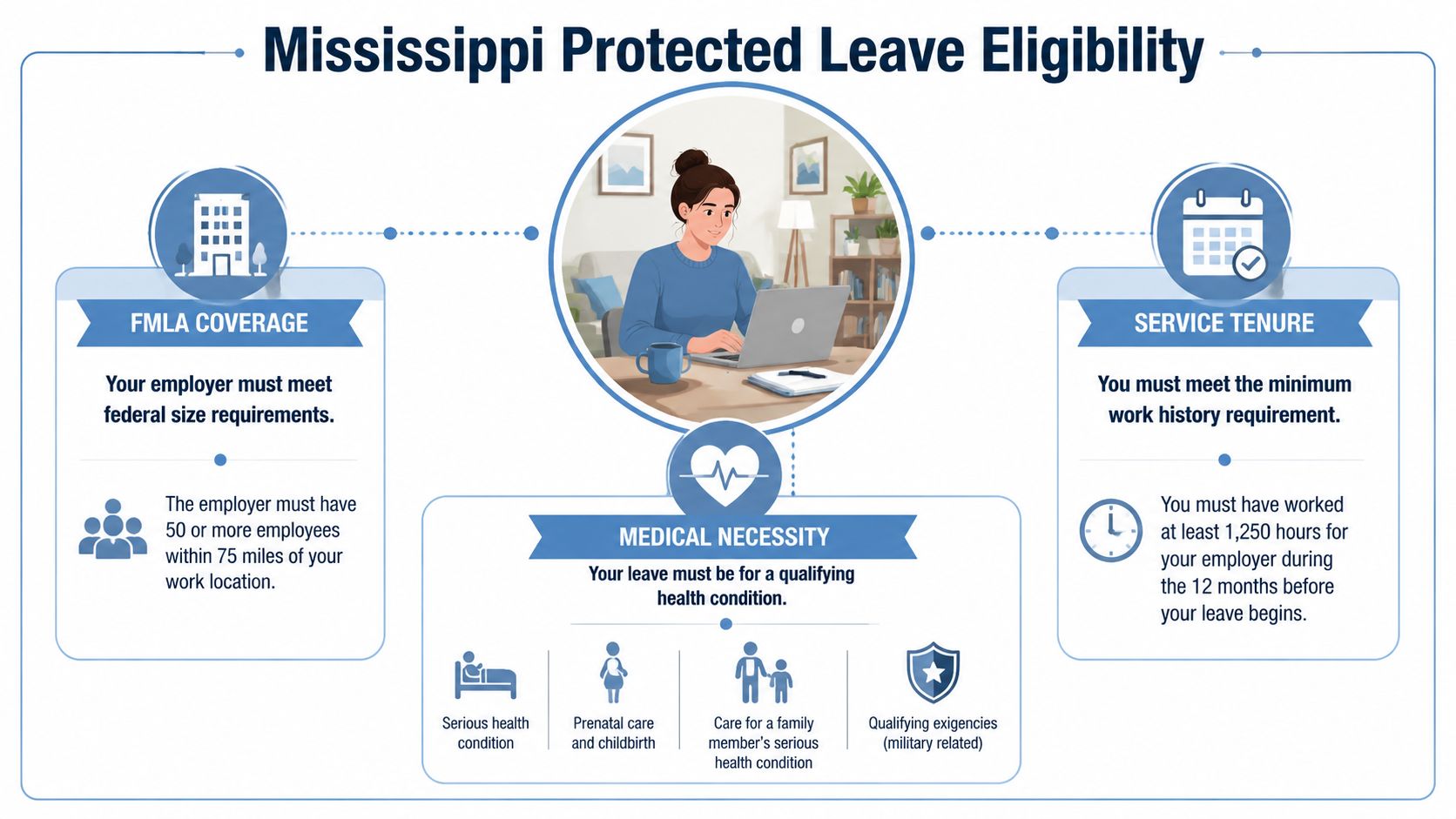
A 2018 U.S. Department of Labor survey on employee and worksite perspectives under the FMLA found that 15% of employees took FMLA-qualifying leave in the prior 12 months. That same source explains the core eligibility rules: you must have been employed for at least 12 months, worked at least 1,250 hours, and work at a location where the employer has 50 or more employees within 75 miles.
What FMLA usually covers
If you meet the eligibility rules, FMLA can provide up to 12 weeks of unpaid, job-protected leave for qualifying reasons such as your own serious health condition, caring for certain family members, or birth and related family-care events. The law also protects your job and addresses continuation of benefits during the leave period.
The key point is simple. If your reason qualifies and you qualify, this is not a favor from management. It is a legal right.
Practical rule: Don’t ask only for “personal leave” if the real reason is a serious health condition or family care need. Vague language can delay the protections you actually need.
USERRA matters for Mississippi service members
For some Mississippi workers, the controlling law isn’t FMLA at all. It’s USERRA, which protects employees who need leave or reemployment rights because of military service obligations. If your absence is tied to training, deployment, or other covered service, your employer doesn’t get to treat that as an ordinary attendance problem.
USERRA cases often turn on timing, notice, and what happened when the employee tried to return to work. Keep every order, email, schedule notice, and payroll record.
A quick way to evaluate your situation
Use this checklist before you send your leave of absence request:
- Count your time: Have you worked for the employer at least 12 months?
- Check your hours: Have you logged at least 1,250 hours in the relevant period?
- Look at location size: Does the employer have 50 or more employees within 75 miles of your worksite?
- Name the reason accurately: Is this for a serious health condition, family care, birth, or a military-related issue?
- Separate FMLA from ADA issues: Sometimes leave is also part of a disability accommodation analysis. If that’s your situation, this guide on ADA leave of absence in Mississippi may help you frame the issue correctly.
What employees get wrong early
Employees often wait too long to connect the facts to the law. They say they “need a little time off” when they really need protected medical leave. They tell a supervisor verbally but never send a follow-up email. They assume HR will recognize the issue automatically.
Sometimes HR does. Sometimes it doesn’t.
That’s why eligibility matters at the front end. If you likely qualify, your request should be drafted and documented as if someone may later need to review it line by line.
How to Formally Submit Your Leave of Absence Request
A leave of absence request should be clear, written, dated, and specific enough to trigger legal review. If the leave is foreseeable, give notice as early as you reasonably can. If it’s an emergency, notify the employer as soon as practicable and follow up in writing.

The strongest requests usually do three things at once. They explain the reason in legally meaningful terms, identify the expected timing if known, and create a paper trail that can’t be denied later.
According to compliance benchmarks for managing leave of absence requests, a standardized FMLA process includes HR verifying eligibility, reviewing medical certification, using a 5-day follow-up period if certification is incomplete, and issuing a formal approval or denial notice. That same source states that manual processes cause 60% of delays and errors. In practice, that means employees should assume paperwork can get lost, misrouted, or misunderstood unless they preserve their own copy of everything.
What to include in the request
You don’t need to write like a lawyer. You do need to write like someone creating a usable record.
Include these points:
The reason for leave
Say enough to alert the employer that the leave may be legally protected. “Serious health condition,” “medical treatment,” “hospitalization,” “care for my parent,” or “military service obligation” are far more useful than “I need some time.”
When the leave starts
If you know the date, include it. If you don’t, say that the need is immediate or pending medical guidance.
Expected duration
Give the best estimate you have. If the timeline is uncertain, say that you’ll update the employer after the next appointment or when your provider gives restrictions.
Request for forms
Ask HR to send any required FMLA or leave paperwork promptly.
A written response
Ask the employer to confirm receipt and provide any approval, denial, or request for additional information in writing.
A simple email template
Subject: Request for Leave of Absence
Dear HR and [Supervisor Name],
I am requesting a leave of absence beginning on [date] because of [my serious health condition / the need to care for my family member / a qualifying military-related reason]. At this time, I expect the leave to last approximately [time period], although that may change based on medical or service-related information.
Please treat this as a request for any protected leave available to me, including FMLA if applicable, and send me any forms or certification paperwork that you need me to complete.
Please confirm receipt of this request in writing.
Thank you,
[Your Name]
That wording matters because it does not lock you into one label while still putting the employer on notice.
Medical certification and privacy
Your employer can usually request supporting certification when the law allows it. That doesn’t mean the employer gets unlimited access to your private medical history. If HR asks for forms, complete them carefully and return them on time. If a certification is incomplete, ask the employer to identify exactly what is missing.
Don’t hand over broad medical records unless a specific legal process requires them. In most cases, the issue is whether the certification supports the leave, not whether the employer gets to read everything in your file.
Build a record that survives a dispute
Use email if you can. If your employer insists on an internal portal or paper form, submit it there, then send a same-day follow-up email to confirm what you filed and when. If your workplace is disorganized, preserving your own timeline matters.
For employees who are helping a family member or managing a complicated set of forms, simple digital tools can help organize records. Even basic systems for setting up serverless web forms can be useful for collecting and time-stamping information when you’re trying to keep paperwork from slipping through the cracks.
- Save the first request
- Save every attachment
- Screenshot portal confirmations
- Keep calendar notes of calls with HR
- Store medical paperwork in one folder
If you want a Mississippi-specific walkthrough of the filing process itself, this guide on how to apply for FMLA is a useful companion.
Common Employer Mistakes and Illegal Denial Tactics
Some denials are lawful. If the employee doesn’t meet eligibility rules, didn’t provide required notice where notice was possible, or never supplied certification after a proper request, the employer may have legitimate grounds to deny protected leave. But many denials aren’t framed that clearly.
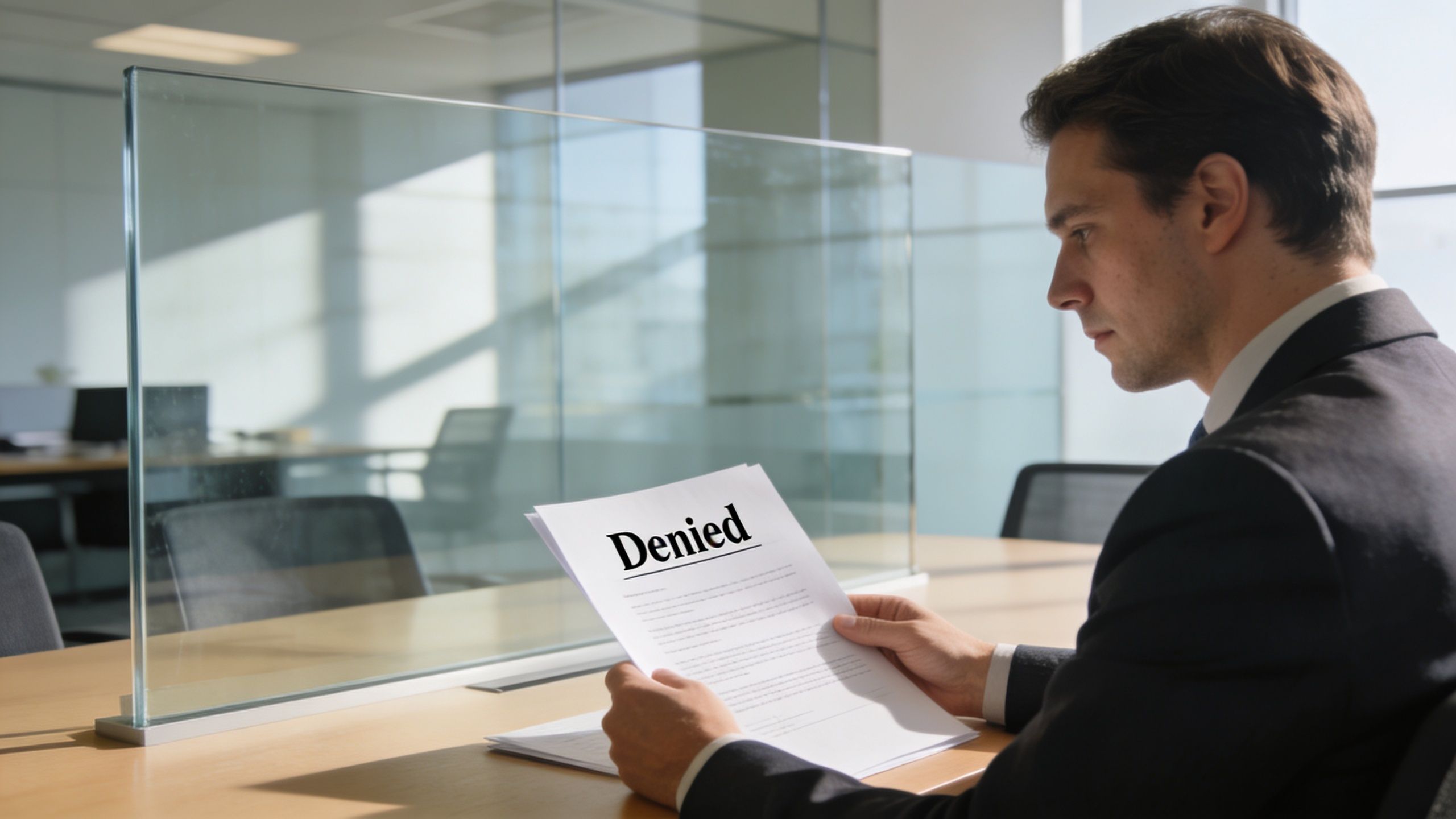
Across the U.S., leave request denials can peak at 18% due to eligibility failures or insufficient notice, and inconsistent documentation is linked to 28% of failed requests and can spark retaliation claims under FMLA. That matters because employers often defend a bad decision by pointing to “paperwork problems” that they helped create.
Lawful denial versus pretext
A lawful denial usually sounds like this: you haven’t worked long enough, you don’t have enough hours, the worksite doesn’t meet coverage rules, or you failed to return required certification after a proper opportunity to fix it.
A pretextual denial usually sounds very different.
| Response from employer | Likely issue |
|---|---|
| “We’re too short-staffed right now.” | Staffing pressure generally doesn’t erase protected leave rights |
| “Your department can’t spare you.” | Business inconvenience is not the same as legal ineligibility |
| “You need to improve performance before asking for leave.” | Performance concerns don’t cancel qualifying protected leave |
| “Come back after this busy season.” | Delay can become interference if the leave is legally protected |
| “We never got your paperwork,” after repeated submissions | Documentation breakdown, sometimes deliberate |
Stalling tactics employees should recognize
Many employees never receive a clean denial. They get a runaround instead.
Watch for patterns like these:
- Repeated claims that paperwork is incomplete: Especially when HR won’t say what is missing.
- No written decision: Verbal responses are easier to deny later.
- Moving deadlines: The employer asks for one document, then another, then another.
- Wrong framing: HR treats a potentially protected leave request as ordinary attendance discipline.
- Supervisor gatekeeping: A manager says no before HR ever conducts a legal review.
If the employer keeps talking about inconvenience instead of eligibility, that’s a warning sign.
What works when you get pushback
Don’t argue in circles with a supervisor. Put the issue back into writing and ask direct questions.
Try something like this:
- Ask for the basis: “Please confirm in writing whether the request is denied, and if so, the specific reason.”
- Ask what is missing: “If any certification is incomplete, please identify the exact section that needs correction.”
- Ask who decided: “Please identify whether HR has reviewed this request under FMLA or any other applicable leave policy.”
- Preserve timing: “I submitted the request on [date] and am following up because I have not received a written decision.”
That kind of response does two jobs. It may force a cleaner review, and it creates a record if the denial turns into a legal dispute.
Identifying and Documenting Retaliation After Taking Leave
The leave may be approved and the legal problem may still begin the day you return.
Retaliation isn’t limited to termination. In many workplaces, it shows up as a pattern of smaller acts that send the same message: you took leave, and now your employer wants you out or wants to make your job worse. Under federal law, retaliation for taking protected FMLA leave can be unlawful. In Mississippi, that distinction matters. Mississippi does not provide a cause of action for retaliation for filing a workers’ compensation claim, so injured workers have to be careful not to assume every leave-related dispute creates the same claim.
What retaliation can look like
Employees often miss retaliation because each event can be explained away in isolation. The better approach is to compare your treatment before leave and after leave.
Look for changes like these:
- Sudden discipline: Your record was clean, then write-ups start immediately after leave.
- Demotion or stripped duties: You return to a lower role, fewer responsibilities, or less desirable assignments.
- Negative reviews with no real buildup: Performance criticism appears only after protected leave.
- Exclusion: Meetings, training, and communications that used to include you now don’t.
- Hostility from management: Comments about reliability, commitment, or “putting the team in a bind.”
- Schedule manipulation: Hours are cut or shifted in ways that look punitive.
Use comparison, not conclusions: Write down what changed, when it changed, who made the decision, and how your treatment differed from before the leave.
How to document it in real time
A retaliation case often rises or falls on records made close to the events. Memory fades. Documents don’t.
Create a simple evidence file with:
- Emails and texts: Save messages from supervisors and HR.
- Calendar entries: Note meetings, schedule changes, and key conversations.
- Contemporaneous notes: Record dates, times, names, and witnesses right after incidents happen.
- Performance records: Keep old evaluations, job descriptions, and commendations for comparison.
- Pay and schedule information: Save anything showing reduced hours, changed duties, or changed compensation structures.
If the leave was related to a traumatic event, serious illness, or family crisis, don’t ignore the mental-health side of what follows. For some people, structured support such as evidence-informed trauma therapy for local residents can also help them process events clearly enough to document what happened at work.
A short explanation of proof issues can also help frame your notes before they become stale. This resource on how to prove retaliation at work addresses the kinds of records lawyers usually look for.
Here’s a practical overview worth watching before you decide what to save and how to organize it:
What not to do
Don’t alter documents. Don’t record information inaccurately to make the story sound stronger. Don’t vent in workplace systems you don’t control.
Write clearly, save originals, and keep your timeline factual. Strong employment cases often come from ordinary records kept carefully, not dramatic evidence.
When You Need a Mississippi Employment Attorney
There’s a point where self-help stops being efficient.
Many employees spend weeks trying to decode HR language, chase missing forms, and guess whether a denial was legal. That’s one reason the online guidance is often inadequate. As noted by this discussion of the gap in leave-request guidance, many resources explain how to fill out a leave request form but offer almost no help on what to do when an employer improperly denies the request or retaliates afterward. That gap matters because employees often don’t realize FMLA leave is a legal right, not a discretionary favor.
Signs it’s time to get legal advice
You should consider speaking with a Mississippi employment lawyer if any of these happened:
- Your employer denied leave without a clear written reason
- HR kept delaying and never gave a real answer
- You were told business needs outweighed your leave request
- The employer demanded excessive or irrelevant medical information
- You were disciplined, demoted, or pushed out after protected leave
- Your military-related absence or return to work was mishandled
- Your employer changed its explanation after you asked questions
A lawyer can review the timeline, the paperwork, and the employer’s stated reason. Sometimes the answer is that the employer acted lawfully. Sometimes the documents show interference, retaliation, or a failure to follow the required process. The key is getting an informed view before evidence disappears and positions harden.
What legal help usually involves
In these cases, legal help often starts with records, not courtroom drama. The lawyer looks at your request, the employer’s responses, medical certification issues, payroll records, handbooks, and what happened after the leave. From there, the lawyer can assess possible next steps, which may include agency complaints or other federal employment-law remedies.
For Mississippi employees comparing options, Nick Norris, P.A. handles employment matters involving FMLA, USERRA, retaliation, and related workplace claims. Whether that office or another Mississippi employment lawyer is the right fit, the practical question is the same. Can someone look at your documents and tell you, plainly, whether your rights were likely violated?
What contingency fees mean
Cost stops a lot of employees from making the call. In employment law, that concern is understandable, especially when you’ve already missed work or had your hours cut.
A common contingency fee range is 40-50% of a recovery. That usually means you don’t pay upfront attorney’s fees, and the lawyer is paid from the recovery if the case succeeds. Fee terms vary by case and agreement, so read them carefully and ask direct questions about costs, expenses, and what happens if there is no recovery.
The most important step is not guessing your way through a denial or a retaliation problem. It’s getting a clear legal assessment while the records are still available and the timeline is still fresh.
If your leave of absence request was denied, delayed, or followed by retaliation, you don’t have to sort it out alone. Nick Norris, P.A. represents Mississippi employees in workplace matters involving FMLA, USERRA, retaliation, discrimination, and wrongful termination, and can review the facts to help you understand what options may be available.
This article has been reviewed for legal accuracy by Nick Norris. For employment law matters in Mississippi, consult with an attorney licensed to practice in your state.
Leave a Reply