

You check your paycheck after a demanding week in Jackson, Gulfport, or Tupelo and notice that the extra hours never became overtime pay. Maybe you answered messages after clocking out, finished paperwork at home, opened the workplace before your shift, or accepted a salary because your employer said salaried workers aren't entitled to overtime. The missing money may look small on one paycheck, but repeated unpaid time can support an unpaid overtime lawsuit under federal law.
Mississippi workers face a specific legal reality. The state has no separate overtime statute and no state human rights commission for employment claims, so federal law carries most of the weight. The evidence, employee classification, employer knowledge, damages calculation, and filing strategy all matter. A careful claim starts with records and a realistic assessment of both the potential recovery and the risks.
Understanding Your Federal Overtime Rights in Mississippi
A warehouse employee in Hattiesburg may finish a shift, stay another hour to load late orders, and still record only the scheduled time. A restaurant employee in Oxford may arrive early to prepare the kitchen, then close after the listed end of the shift. If the employer knows the work is happening and the employee is non-exempt, those hours may count even when a supervisor says, “Just help out,” or tells the worker not to record them.
Mississippi doesn't provide its own state overtime law that gives employees a separate overtime remedy. The governing protection is the federal Fair Labor Standards Act, commonly called the FLSA. The FLSA generally requires covered, non-exempt employees to receive overtime pay at one and one-half times their regular rate for hours worked above 40 in a single workweek. A week is measured separately, so hours usually can't be averaged across two workweeks to avoid overtime.
The federal framework is explained in more detail in this guide to what the Fair Labor Standards Act protects. The practical point is simple: your job title, pay method, or employer's internal policy doesn't decide the issue by itself. The law looks at the work performed, the applicable exemption, the hours worked, and the employer's handling of time records.
The recovery window matters
Most FLSA claims generally reach back two years, with the period extending to three years for willful violations. That rule comes from the federal framework described by Justia's overview of overtime and wage-hour laws. Waiting can therefore erase otherwise recoverable workweeks, even when the underlying practice continues.
The same enforcement data show why these cases matter. A dataset of concluded U.S. Department of Labor wage-theft cases from 2005 onward reports 367,893 enforcement actions, $4.79 billion in recovered back wages, and 5,413,387 workers affected. It also reports that 86% of recovered money was tied to unpaid overtime, with $2.97 billion in unpaid-overtime back wages compared with $494.4 million in minimum-wage back wages. Those figures are national enforcement data, but they put an individual Mississippi paycheck dispute in context. Unpaid overtime isn't a technical complaint with no practical consequence. It's a recurring form of wage theft.
Practical rule: Don't wait for a final paycheck or termination before preserving evidence. The limitations period keeps running while you decide what to do.
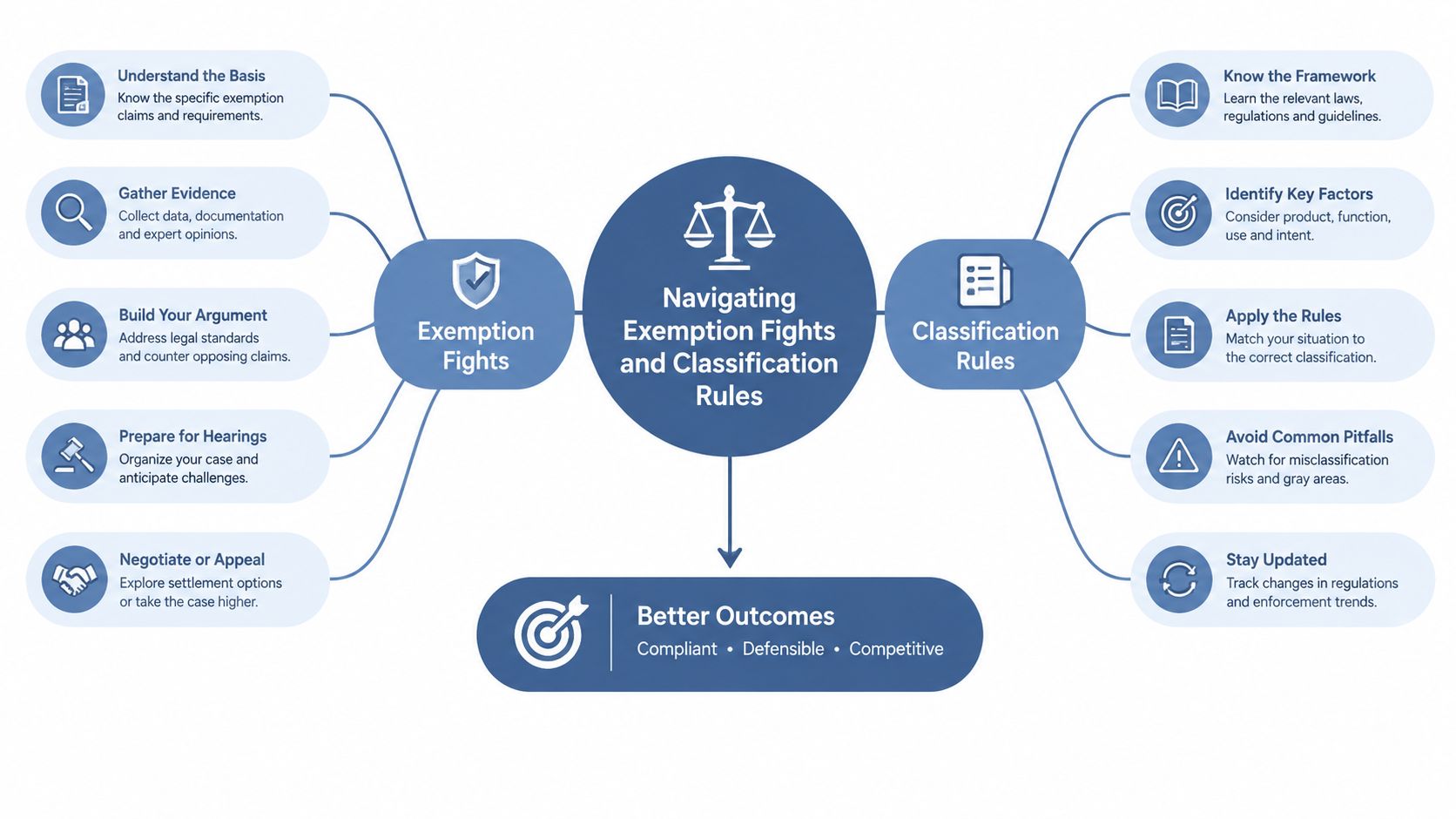
Navigating Exemption Fights and Classification Rules
The most important question in many Mississippi overtime disputes isn't whether you worked late. It's whether your employer can prove that the FLSA's exemption requirements apply to you. A salary alone doesn't automatically remove overtime protection. Executive, administrative, and professional exemptions generally depend on both compensation requirements and the employee's actual duties, not merely the label printed on a pay stub.
An executive analysis may examine whether the employee's primary duty involves management, whether the employee directs other workers, and whether the employee has meaningful input into hiring or firing decisions. An administrative analysis focuses on office or non-manual work connected to business operations and the exercise of discretion on significant matters. A professional exemption may involve learned professional work requiring advanced knowledge or creative professional work. The employer's job description can help, but day-to-day reality often matters more.
The distinction between exempt and non-exempt status is addressed in this Mississippi employment law guide to exempt versus non-exempt employees. A manager who spends most of the week performing the same production work as hourly employees may have a different exemption analysis from a manager who regularly supervises staff and makes operational decisions. A “coordinator” who follows detailed procedures may not fit the same analysis as an administrator exercising independent judgment.
The Supreme Court changed the proof landscape
In January 2025, the U.S. Supreme Court lowered the employer's burden for proving an FLSA exemption from clear and convincing evidence to a preponderance of the evidence, as reported by Reuters' coverage of the Supreme Court decision. That means the employer generally must show that it is more likely than not that the exemption applies, rather than meeting the higher former standard.
This shift doesn't make every salaried worker an overtime claimant, and it doesn't eliminate the need to examine actual duties. It does make the classification fight more consequential. Employers may have a more manageable burden when defending an exemption, while employees need focused evidence showing what they really did, who controlled their work, how much discretion they exercised, and whether their supposed management duties were genuine.
The issue remains active in federal litigation. Private federal FLSA filings rose from 5,456 in 2024 to 5,702 in 2025, and roughly 30% were class actions, according to the same Reuters report. Those figures don't predict the result of a particular Mississippi case, but they show why classification, common pay practices, and group litigation continue to shape wage disputes.
Reconstructing Your Hours and Gathering Evidence
A missing timecard doesn't automatically defeat an overtime claim. Under the FLSA evidentiary framework, an employee may establish that work was performed and provide a “just and reasonable inference” of the amount of unpaid time when the employer's records are missing or unreliable. The employer then must produce precise hours or disprove the inference.
That rule helps, but it isn't a shortcut. Courts can reject vague testimony about “usually” working late when the employee can't connect the estimate to particular shifts, dates, or hour totals. A day-by-day reconstruction is much stronger than a broad statement that you worked around 50 hours every week.
Build a record that another person can follow
Start with a private timeline. For each workday, record:
- Start and finish times: Include opening duties, closing work, travel between required work locations, and work performed after clocking out.
- Unpaid tasks: Identify the emails, reports, calls, meetings, cleaning, stocking, or preparation completed without pay.
- Supporting evidence: Match each entry with texts, emails, calendar appointments, scheduling software, location records, photographs, or coworker information.
- Payroll comparison: Preserve pay stubs and time records so the claimed hours can be compared with what the employer paid.
Don't alter employer records or access files you're not authorized to use. Preserve materials lawfully, keep copies in a personal location, and avoid discussing the claim through a company email account. A calendar entry saying “inventory after shift” is more useful when it corresponds with a message, a coworker's recollection, or a system record showing activity at that time.
The practical importance of off-the-clock work is discussed in this guide to working off the clock in Mississippi. A supervisor's instruction not to report time can be important, but direct instructions aren't required in every dispute. Repeated visibility of the work, corrections to timecards, required deadlines, or managers receiving the resulting work may help address whether the employer knew or should have known about the hours.
A credible reconstruction doesn't need perfect memory. It needs enough specific, consistent detail to let a judge or jury reasonably approximate the unpaid time.
Calculating Damages and Understanding Legal Fees
The value of a wage claim depends on more than multiplying unpaid hours by an hourly rate. The calculation may involve the regular rate, overtime premium, compensation that should have been included in that rate, liquidated damages, attorney fees, litigation costs, and the number of workers affected.
For a non-exempt worker, overtime generally involves the additional premium owed for hours above 40 in a workweek. The regular rate can become complicated when compensation includes nondiscretionary bonuses, commissions, shift differentials, or other payments tied to work or performance. A worker may have received some overtime pay but still be underpaid because the employer calculated the overtime rate from an incomplete regular rate.
Liquidated damages can add another major issue. The FLSA may permit an award equal to the unpaid wages, effectively doubling the back-pay component when the employer can't establish an applicable defense. That outcome isn't automatic, and a lawyer must evaluate the employer's good-faith position, records, communications, and conduct.
The financial trade-offs
Collective actions can make a case practical when many workers experienced the same timekeeping or pay policy. National settlement research described in an analysis of wage-and-hour litigation trends reported that 90% of all reported collective actions were wage-and-hour claims, and the average settlement among the top 10 reported wage-and-hour class and collective actions in 2010 was $34 million. Another review identified 613 settlements from January 2007 through March 2015, with about 75 settlements per year, 90% of back-wage payments including an overtime violation, and 53% of underlying FLSA violations involving overtime alone. These national figures don't establish the value of a Mississippi claim, but they explain why a common policy can matter more than a single employee's small weekly loss.
Contingency representation also has a cost. A commonly used structure is 33 1/3% before suit and 40% after filing, with some firms stating that the total can reach 45% to 50% when an appeal is involved, as described in this Mississippi workers' compensation fee discussion. Your written engagement agreement controls. Ask whether expenses are deducted before or after the fee, who pays litigation costs, and how an appeal changes the arrangement.
| Legal Factor | Mississippi Reality |
|---|---|
| Governing overtime law | Federal FLSA protections control because Mississippi has no separate state overtime statute. |
| Back-pay period | Generally two years, extending to three years for willful violations. |
| Strong leverage | Specific evidence of missing records, common pay practices, and employer knowledge. |
| Common calculation issue | The regular rate may require review of bonuses, commissions, and shift differentials. |
| Fee planning | Contingency percentages and expense treatment must be confirmed in the engagement agreement. |
Filing Your Claim in Federal Court
A Mississippi unpaid overtime lawsuit proceeds under federal law. The relevant forum is federal court, not state court. Mississippi has no state-specific overtime statute and no state human rights commission for employment claims, which means workers generally can't rely on a state agency to investigate wage theft, discrimination, harassment, or retaliation. The federal system, including the U.S. Department of Labor and applicable federal courts, becomes the central path for enforcement.
The lack of a state human rights commission is described in this discussion of civil rights protections in Mississippi. Wage claims and discrimination claims have different procedures, so a worker shouldn't assume that an EEOC charge is required before bringing an FLSA overtime claim. The correct administrative step depends on the legal theory, and an attorney should identify the deadline and filing requirement before a complaint is prepared.
What the federal process usually requires
A lawyer will typically evaluate the following before filing:
- Coverage and status: Determine whether the employer and employee fall within the FLSA and whether an exemption is defensible.
- Notice and knowledge: Organize proof that the employer knew, or had reason to know, the employee performed unpaid work.
- Time records: Compare schedules, payroll data, timecards, messages, and the employee's reconstruction.
- Limitations: Identify the oldest potentially recoverable workweeks and whether willfulness can be supported.
- Group claims: Determine whether other Mississippi workers were subject to the same policy and whether a collective action makes sense.
The FLSA also protects employees from retaliation for complaining about unpaid overtime or asserting wage rights. That protection is distinct from Mississippi's treatment of workers' compensation retaliation. Mississippi doesn't provide a specific state-law retaliation claim for filing a workers' compensation claim, so an employee punished after filing a comp claim can't rely on a dedicated Mississippi anti-retaliation statute for that activity alone, as explained in this Mississippi workers' compensation retaliation analysis.
Don't combine these theories casually. A wage complaint may trigger federal FLSA protection, while retaliation tied only to a workers' compensation filing may have no standalone Mississippi statutory route. The facts, timing, decision-maker, stated reason, and available federal law must be assessed separately.
Partnering with an Employment Lawyer for Maximum Impact
An unpaid overtime claim can look simple until the employer raises an exemption, disputes the hours, challenges knowledge, or argues that bonuses shouldn't affect the regular rate. Specialized employment counsel can test those defenses against payroll records, scheduling systems, workplace messages, job duties, and witness testimony instead of relying on the employee's job title.
Prepare for an initial evaluation by bringing pay stubs, employment agreements, job descriptions, time records, schedules, written policies, relevant messages, and a dated reconstruction of each workweek. Identify the people who assigned work, approved time, changed records, or received work completed after hours. The cleaner the timeline, the faster counsel can separate recoverable overtime from unsupported estimates.
What focused representation adds
A lawyer may use discovery to seek payroll data, timekeeping edits, scheduling records, internal communications, bonus policies, and information about similarly situated employees. That process can reveal whether the problem came from an isolated supervisor, a written policy, a software configuration, or a company-wide instruction to work without recording time.
The strategy should also account for settlement, collective action, trial, and appeal. An early settlement can reduce expense and uncertainty, but accepting too quickly may leave group claims or liquidated damages unresolved. Proceeding further can improve access to records, yet it also increases time, cost, and the risk of an adverse ruling.
Nick Norris, P.A. represents Mississippi employees in unpaid overtime and related employment matters, including federal claims, negotiation, litigation, and appeals. The firm can evaluate reconstructed hours, exemption disputes, regular-rate issues, and retaliation concerns while accounting for Mississippi's limits on workers' compensation retaliation claims.
Nick Norris, P.A. offers Mississippi workers case evaluations and representation for unpaid overtime, wage-and-hour violations, and related federal employment claims. If your employer required off-the-clock work, misclassified your position, or used incomplete pay calculations, visit Nick Norris, P.A. to discuss your records and potential next steps.
Leave a Reply